"A family tree can wither if nobody tends its roots."

Mar15th2026

Porche & Richie Plantation Roots

by  Phyllis Zeck

In my previous post I wrote about the Baumann branch of my mother-in-law Yvonne Porche Zeck’s family. In my research for that post I stumbled across a fascinating family biography in WikiTree about the Porche branch.

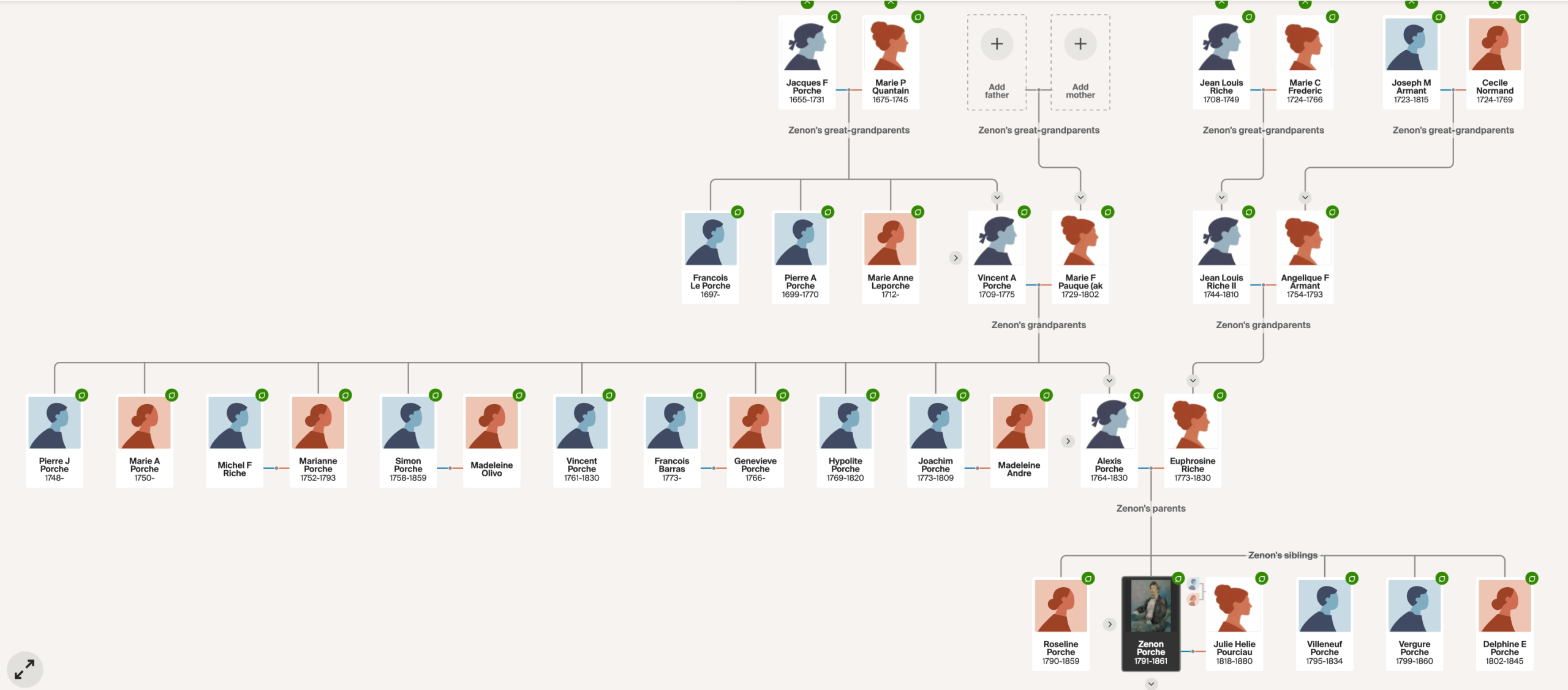
Zenon Porche (1791-1861) was Yvonne’s great grandfather. Zenon’s great grandparents were Jacques Le Porche (1655-1731) and Marie Philiberte Quantain (1675-1745). They immigrated from France to Louisiana in 1720 with their three sons Francois (age 22), Pierre (age 20), Vincent Alexis (age 11) (Zenon’s great grandfather) and their daughter Marie Anne (age 8).
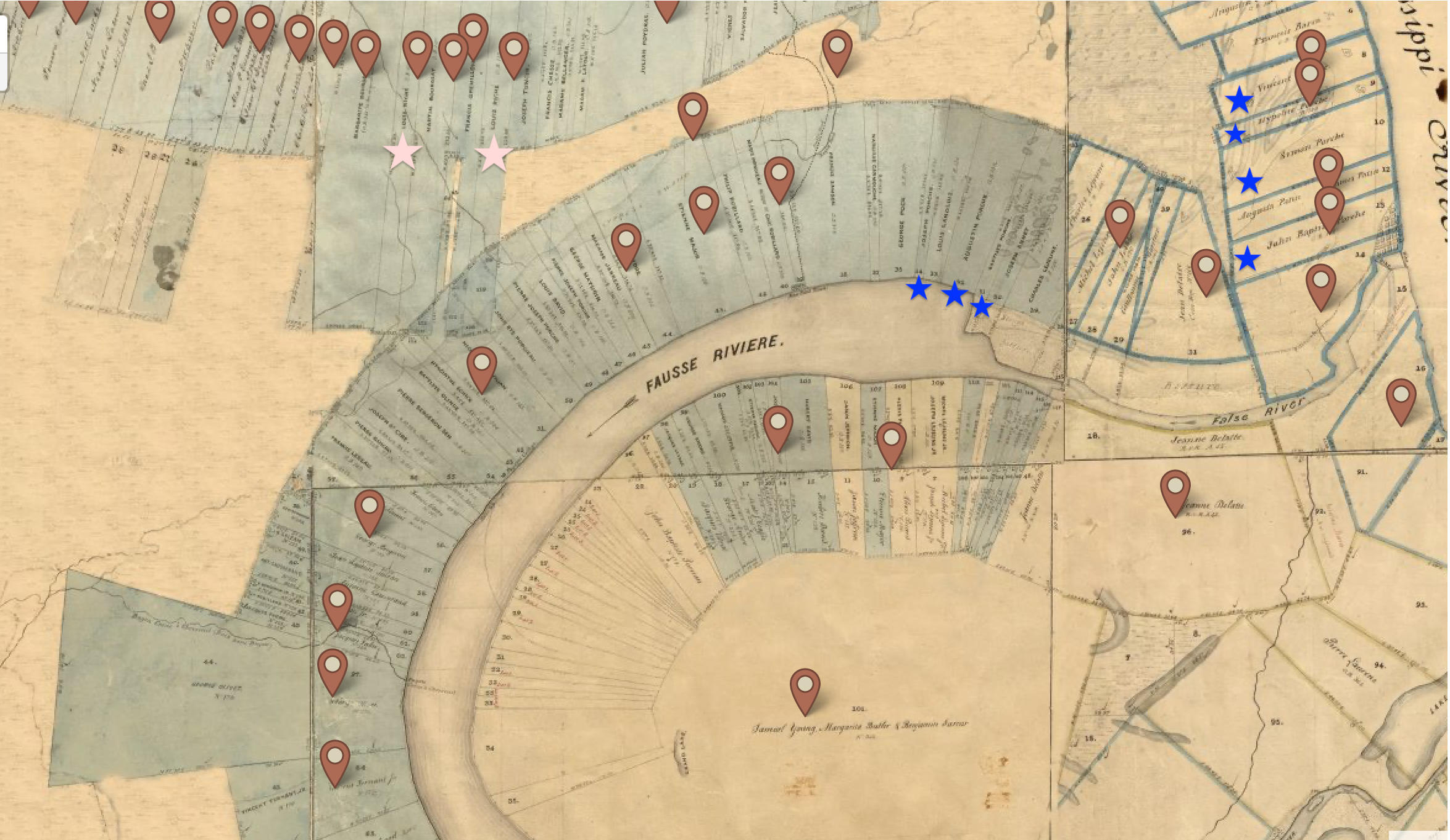
Both sets of Zenon’s grandparents, the Porche and Richie ancestors, owned numerous large plantations along the False River and the Mississippi River about 100 miles north of  New Orleans. The map below is courtesy of LSC Berkeley and the Louisiana Slave Conspiracies research team. You can click here to read how they stitched together who owned plantations in the 1790’s. The blue stars were Porche plantations and the pink stars were Louis Riche (Zenon’s grandfather) plantations. One of Louis Richie’s plots was 304 acres, the other was 406 acres. 
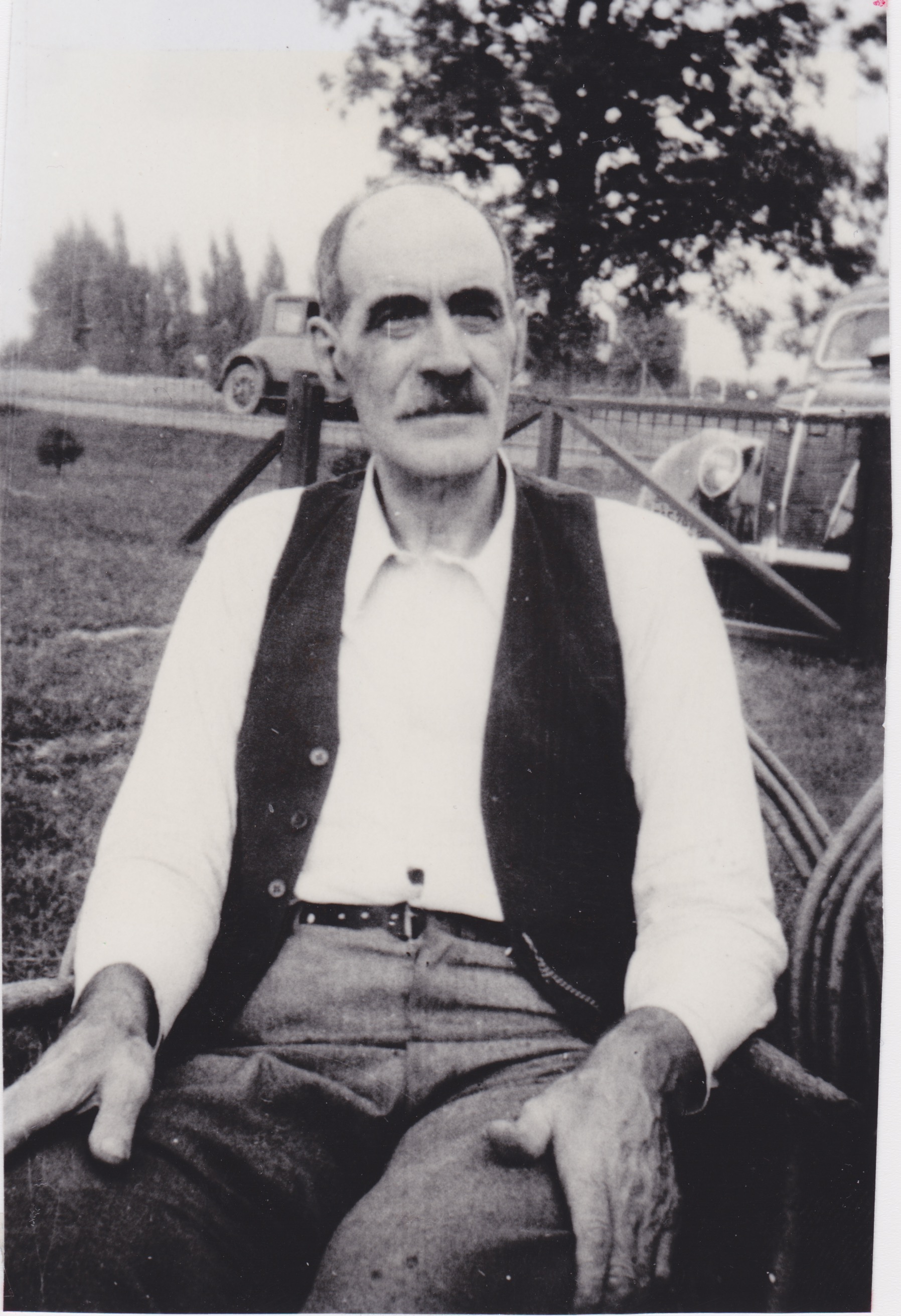
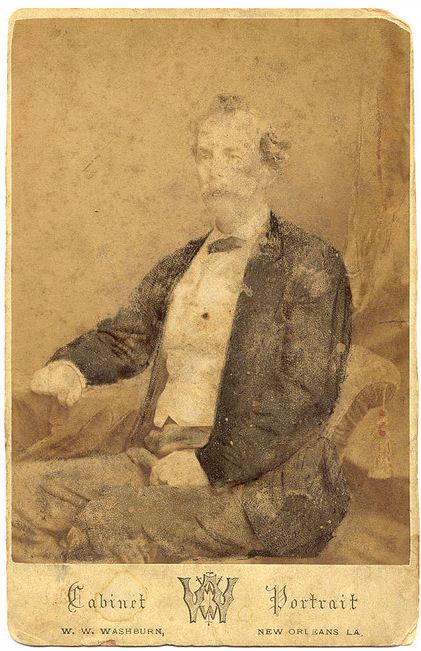
Below is a photo of Yvonne’s great grandfather Zenon Porche (1791-1861). The mother of his children was Julie Helie Pourciau (1818-1880). In the 1850 census Julie’s race is listed as white and in the 1860 census she is listed as mulatto as are all of their children. Zenon’s occupation was a planter, his land value was $110,000.00, his personal estate value was $100,000.00 and he listed 32 enslaved people. He owned a 130 acre plantation which according to Thaddeus (see below) may be a section of one of the Riche plantations. 

Below is the actual text from the biography of Zenon along with his ancestors and descendants. This is my first interaction with Wikitree and Zenon’s page is very detailed. The information was provided by Thaddeus Norman. You can see more of what he found about the Porche and Riche families on WikiTree. Thank you to Thaddeus for his detailed research. For source information refer to the link above.

Biography by Thaddeus Norman
“Between Pointe Coupee post-office and the Grand Levee, the oldest settled portion of the parish [of Pointe Coupee], are the best sugar estates, among them those of Col. F. L. Claiborne, Zenon Porche, Dr. A. Ferrier, E. Cooley, Capt. Morrison McCullum and others.” [1]

Zenon Porche was born on November 28, 1791. He was the son of Alexis Porche and Euphrosine Marguerite Riche.[2] Alexis Porche was the son of Vincent Porche and Marie Françoise Pauque. Euphrosine Marguerite Riche was the daughter of Jean Louis Riche and Angelique Fleurie Armant. Both the Porche and Riche families settled in Louisiana decades earlier and were well established in the community.

The Family & The Pointe Coupee Slave Conspiracy

Zenon’s grandfather, Louis Riche, owned two tracts of land along the Mississippi river northwest of present day New Roads, LA [3]. He also owned many slaves, some of whom testified to the committee investigating the Pointe Coupee Slave Conspiracy of 1795 [4][5], as did some of the slaves of Zenon’s grandmother Marie Francoise Poche’s (the widow Porche)[6][7][8]. Zenon was just a child when this conspiracy occurred so it is not clear to what extent he was aware of these happenings. However, he grew up in a family with extensive slave holdings. In the 1810 census Louis Riche is listed as owning 52 slaves [9] and in the 1820 census Zenon’s father, Alexis Porche, is listed as owning 73 [10]. Zenon is not enumerated in either of these censuses, but he is likely one of the free white male persons 26 to 44 in Alexis Porche’s household and one of the free white male persons 16 to 25 in the household of Louis Riche. Zenon first appears in the US Federal Census in 1830 [11]. There he is listed as owning 24 slaves.

War or 1812

During the War of 1812 Zenon served as 2nd Lieutenant in De Clouet’s Regiment of the Louisiana Militia and fought in the Battle of New Orleans alongside many of his relatives, friends, and neighbors [12]. After the battle he would return to Pointe Coupee to acquire slaves and land.

The Zenon Porche Plantation
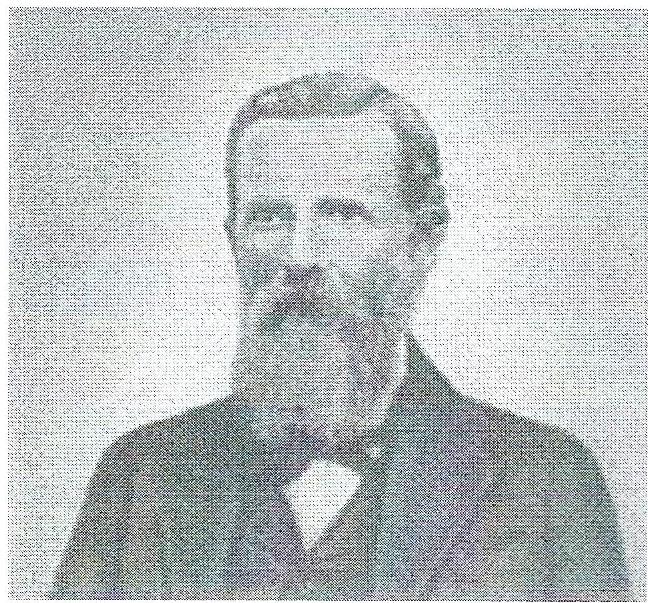
Jean Arthur Porche (1842-1916) Zenon’s son

Over time Zenon would acquire what would become known in his era as the Zenon Porche Plantation [13]. This estate appears on “Norman’s Chart of the Lower Mississippi River”, which is a map created circa 1858 by Marie Adrien Persac and published by Benjamin Moore Norman [14]. It is a map of the plantations along the Mississippi river from Natchez to New Orleans. On this map Zenon is shown owning a slice of Mississippi riverfront in Pointe Coupee parish northwest of the court house in New Roads, and owning land along the Mississippi river in West Feliciana Parish. The location of the land in Pointe Coupee Parish overlaps with land of Louis Riche’s former estate surveyed in 1805[15][16], suggesting that Zenon inherited all or part of this land from Louis Riche or Euphrosine Marguerite Riche, Zenon’s mother. However, Brian Costello suggests Zenon purchased the property from the Croziet family in 1831, and built what is now known as the Labatut House on this property afterwards [17]. Analysis of the building’s material and architectural style of the Labatut House suggests the house was built sometime in the late 1830s or early 1840s [18]. This time frame falls after the death of his mother and when Zenon first appears living independently of his relatives. From 1830 to 1850 Zenon’s slave holdings would grow from 24 to 74 people[19], but in 1860 it appears to have declined to 42 people[20]. Many of these enslaved people were baptized in the Catholic Church and received other sacraments[21]. The West Feliciana Parish land was owned jointly with his brother, Villeneuve Porche. After Villeneuve’s death in 1834 Zenon would own the property jointly with Villeneuve’s widow and children[22].

Ermine Barra & Hypolite Porche

In the 1830 US Federal census Zenon is the only free person in his household, but in the 1840 census two free people of color (fpc) are living with him[23]. One was a male between the ages of 36 and 54, and the other was a female between the ages of 1 and 10. It is not clear who the man was, but the girl was most certainly Zenon’s daughter Ermine (Barra) Porche, whom he is said to have had with a free woman of color (fwc) by the name of Armantine La Fleur. In 1850 Ermine Porche appears as a part of Zenon’s household, and is stated as being 16 years old[24]. Ten years earlier she would be between the 1 and 10 age range matching the age range of the colored child living with Zenon at that time.

The household enumerated next to Zenon’s in the 1850 census was that of Hypolite Porche[25]. He was a free man of color (fmc) approximately 36 years old and worked as an overseer, possibly at the Zenon Porche Plantation. It is not clear what familial relationship Hypolite had with Zenon. This Hypolite Porche is not the fmc son of Zenon’s uncle Vincent Alexis Porche and Adelaide Carmouche, fwc, for that Hypolite was living with Adelaide in 1850[26]. Nor is there any current knowledge of Zenon having a fmc son by the name of Hypolite. It could be the case that Hypolite is a son of Zenon’s uncle Hypolite Porche who died in 1819. Zenon is known to have had dealings with other fmc members of the Porche family who are likely sons of his uncle Hypolite. In 1821 Hypolite’s son Joachim Porche, fmc, sold whatever claim he had to a property in Hypolite Porche’s estate to Zenon Porche for $705.25[27]. The following year Hypolite’s son Zenon Porche, fmc, also sold whatever claim he had to a property in Hypolite’s estate to Zenon Porche for $705.27[28]. Zenon’s 1850 neighbor, Hypolite Porche, could also be the fmc person in Zenon’s 1840 household, but Hypolite would have to be a different age than is stated in 1850 and 1840.

Julie, Pauline, Arsene & Onil Bourgeat[29]
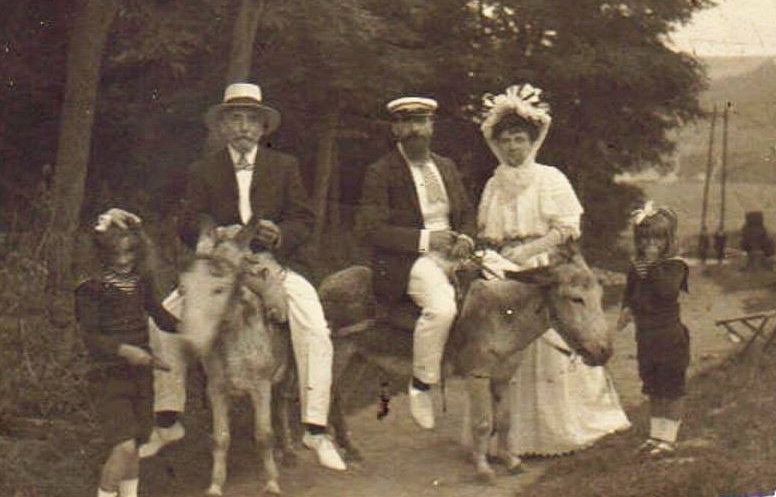
Charles E. Porche (left) (1856-1925) and Auguste Hilaire Porche (1846-) Zenon’s sons

Zenon’s 2nd cousin Onil Bourgeat, their common great grandparents were Louis Richeand Marie Catherine Frederic, agreed to emancipate his slaves Pauline and her mother Arsene. Arsene agreed to pay Onil $1,500 for this emancipation. Arsene paid $600 for her own freedom and received the legal paperwork. Later, a friend paid the remaining $900 for Pauline’s freedom. Shortly afterwards, Pauline gave birth to a girl named Julie. Onil demanded an extra $100 for Julie’s emancipation, which was also paid. In 1852, Onil finalized Pauline’s emancipation, but he didn’t include Julie in the documentation. Both Arsene and Pauline’s emancipation were legally approved by the authorities. After Onil’s death in 1853, Julie was listed as property in his estate, and the executor of the estate was preparing to sell her. Pauline filed a lawsuit to stop the sale and have Julie’s freedom recognized. Zenon testified in this case. The case would eventually be settled by the Supreme Court of Louisiana. The court’s ruling was complex. The judges ruled that Julie was not free, reversing the lower court’s decision. They did, however, block the sale of Julie and ordered that she be given to Pauline since the contract for Julie’s emancipation had been proven[30]. Ultimately, Julie gained her freedom, but in a way that upheld the institution of slavery.

Julie Pourciau, “Madam Zenon Porche”

Zenon would come to have a long term relationship with Juile Pourciau, fwc. It is not clear when the relationship started, but Julie likely began living with Zenon around 1841. At this time runaway slaves from plantations neighboring the Zenon Porche Plantation were said to have set up camp on the property of “Madam Zenon Porche” [31], which is most likely a reference to Zenon and Julie’s co-habitation on his estate. Zenon and Julie would have 8 children together. They were: Jean Arthur, August Hilaire, Leontine (Tounoir), Louis Alphonse, Jules George, Julia Georgina (Bertrand), Marie Alice (Juge) and Joseph Alphonse.

The couple would remain together till Zenon’s death in 1861, and Zenon is said to have had his sons Jean Arthur, fmc, and August Hilaire, fmc, educated in France[40]. Jean Arthur returned to America from France in 1860[41], but August Hilaire married in Paris on January 4, 1893 and is not known to have returned to America[42].

Between 1850 and 1860 there were two, perhaps three, other free women of color if Zenon’s house. They were Susan Porche and Hhgercinkte Porche, who appear in the 1850 census[43], and Hyacinthe Pourciau, who appears in the 1860 census[44]. Its is not clear how these women are related to Zenon and Julie. However, Jean Arthur named one of his daughters Susan[45], which suggest he had some fond memories of her. Hhgercinkte Porche and Hyacinthe Pourciau might be the same person. In 1850 Hhgercinkte is stated as being 48 and in 1860 Hyacinthe is stated as being 55. So the women are about the same age, and Hhgercinkte could be a mishearing of Hyacinthe. Interestingly, in 1860 Julie, Hyacinthe and all of Zenon’s children bear the surname Pourciau. This suggests Hyacinthe was one of Julie’s relatives. Curiously, these two women and the children are listed as being in a different household than Zenon even though they occupied the same dwelling with Zenon.

Political Career & Support for the Confederacy

Towards the end of his life Zenon appears to have become more civically minded. In 1858 he was appointed a Commissioner of Elections for the Sixth Distict in Pointe Coupee Parish by the Parish Police Jury[46]. P. Caret, Michel Villeret and L. B. Dayeries were appointed as co-commissioners. During the early days of the Civil War the Pointe Coupee Parish Police Jury passed a resolution to allow bond holders to cash in their bonds and have the funds appropriated for military purposes. Zenon cashed in $500 worth of bonds for this purpose[47]. Zenon was the largest bond holder in this effort and his funds represented nearly 17% of all money collected in June 1861. Yet in spite of this, it is not clear if Zenon was an enthusiastic supporter of the Confederate cause. Many of Zenon’s relatives, including his son August Hilarie, were residing in Paris during the war. Zenon was issued a passport on May 1, 1860 when both sons were in France[48]. So it is conceivable that Zenon intended to ride out the Civil War in France with his family.

Death & Legacy
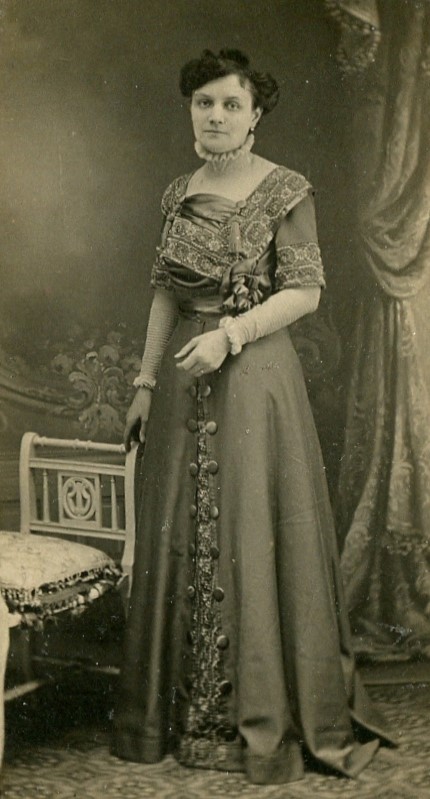
Marie Alice Porche (1859-1938) Zenon’s daughter

Zenon’s intended use for his passport will never be known, for he died around August 21, 1861 in Pointe Coupee, LA[49]. He died a very wealthy man. In the 1860 census he is stated as owning property with a total value, including slaves, of $210,000[50]. This made him one of the richest men in Pointe Coupee Parish. At this time in history it would have been illegal in Louisiana for Zenon to make any of his acknowledged children beneficiaries in his will because they all had African ancestry. Thus, before he died he is said to have given each of his acknowledged children $5,000. There is probably much truth to this story, though the actual dollar amount given may not be knowable. In her will Marie Alice Juge stated she inherited property from her father, Zenon Porche, and in the 1870 US Census Jean Arthur Porche is listed as owning property with a total value of $8,000[51].

In his will Zenon gifted a considerable amount of money to his nephews and nieces[52]. He gave $5,000 to each of the following: Auguste Ferrier, Leon Ferrier, Estelle Ferrier, wife of Pierre Poutz, Rosa Ferrier, widow of Azby Destrehan, Elodie Porche, wife of Frederick Durrive, Melinia Porche, wife of A. A. Kaufmann, Kaufmann minor child of Melinia Porche, A. A. Kaufmann, husband of Melinia Porche, Rosa Porche, wife of E. B. Dayeries.

Zenon’s Ferrier nephews and nieces where the children of his sister Delphine and her husband Dr. Auguste Ferrier. His Porche nieces were the children of his brother Villeneuve and his wife Carmelite Le Doux. Zenon also gifted a $20,000 endowment to Poydras College[53], which is now used as a community center.

The Labatut House
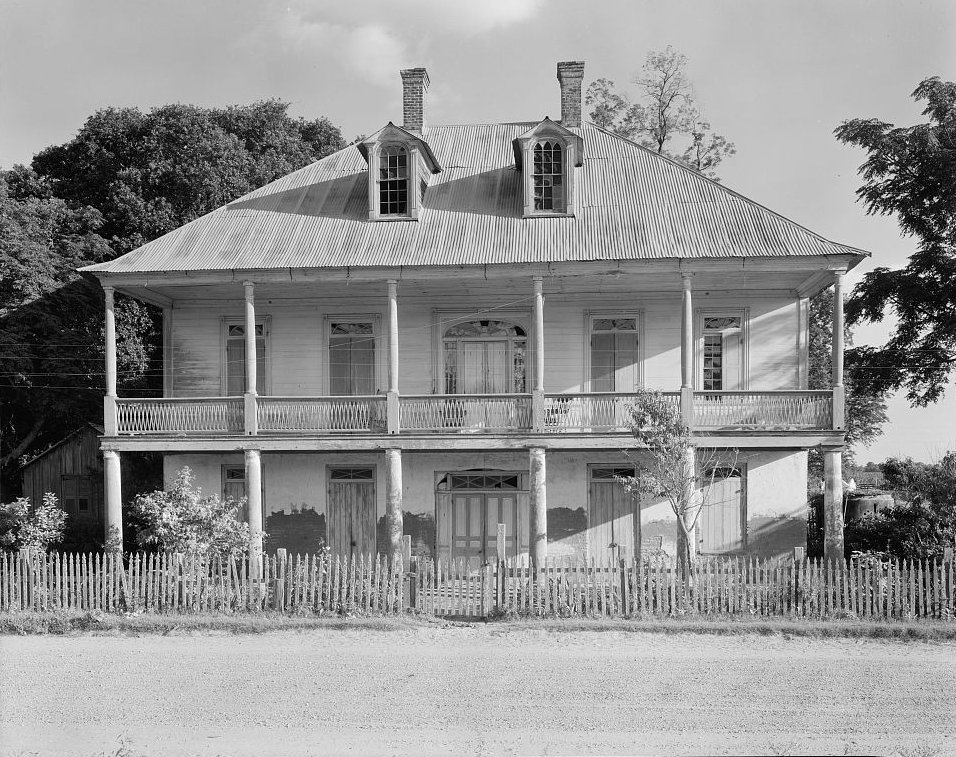
Labatut Plantation LouisianaA strange series of events resulted in the house Zenon Porche built and lived in with Julie Pourciau, fwc, and their children becoming known as the Labatut House. Zenon died in August 1861 during the early days of the US Civil War (1861 – 1865). None of his children could inherit the house due to their African ancestry. The executor of Zenon’s estate, Evariste Barra, died in 1863, before the estate could be settled. Evariste’s nephew Jules Labatut became the new executor of the estate[54]. Both men were cousins of Zenon Porche. Their common ancestors were Vincent Porche and Marie Françoise Pauque. Like many Southerners Jules had become heavily indebted after the war, and much of his property was sold at auction to settle debts owed to the Bank of Kentucky and others[55]. His creditors also tried to seize the estate of Zenon Porche for payment of these debts. Jules, on behalf of Zenon’s beneficiaries sued to prevent the seizure. The case was ultimately settled in 1871 by the Supreme Court of Louisiana[56]. The court decided in favor of the beneficiaries of Zenon’s estate, ruling that the estate was not Jules’ personal property, thus it could not be seized to repay Jules’ debts. In 1872 Jules Labatut’s wife Marie Clelie Ranson would buy the house at a sheriff’s auction for $25,000[57]. Their descendants owned the house when Robert W. Tebbs photographed it during his 1926 photographic tour of Louisiana plantations[58]. After this the house became known as the Labatut House.


Mar6th2026

Bound in Books: The Baumann Family Story Lives On

by  Phyllis Zeck


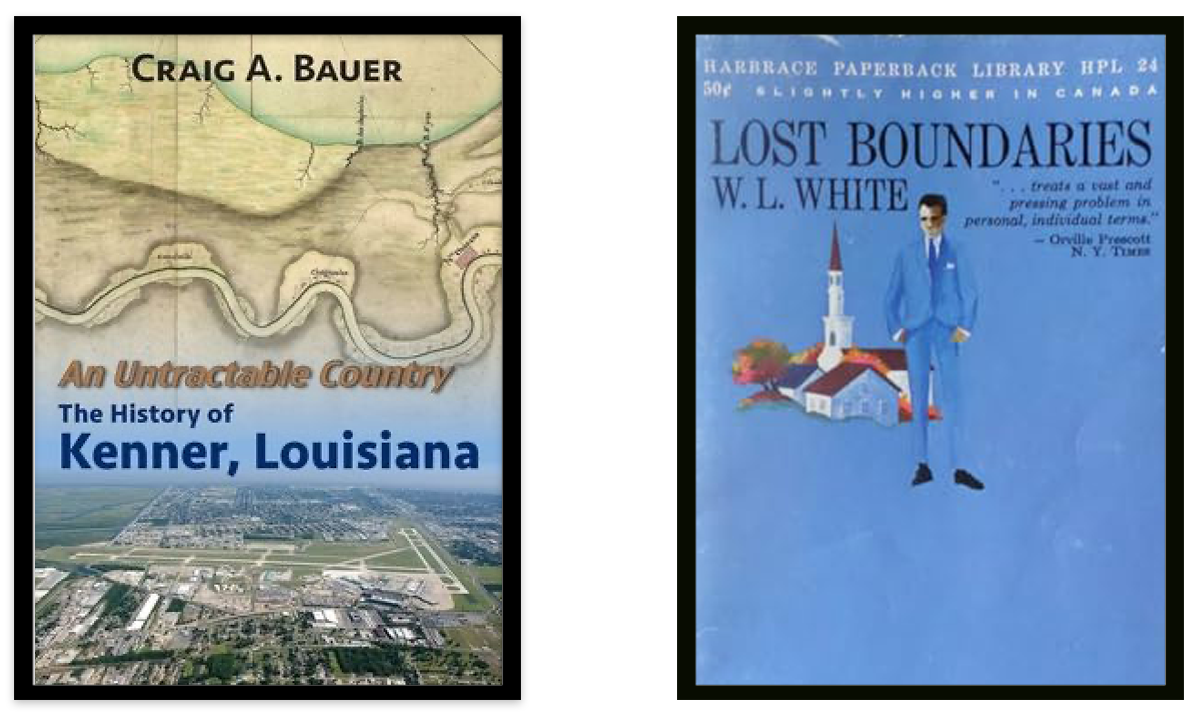
In 2013 I wrote a post about my mother-in-law, Yvonne Porche Zeck’s ancestry. It’s been awhile since I’ve been back to research her family tree and in the past 10 years I’ve acquired many photos and contacts from the Baumann branch. The two books above have peaked my desire to revisit this family. 

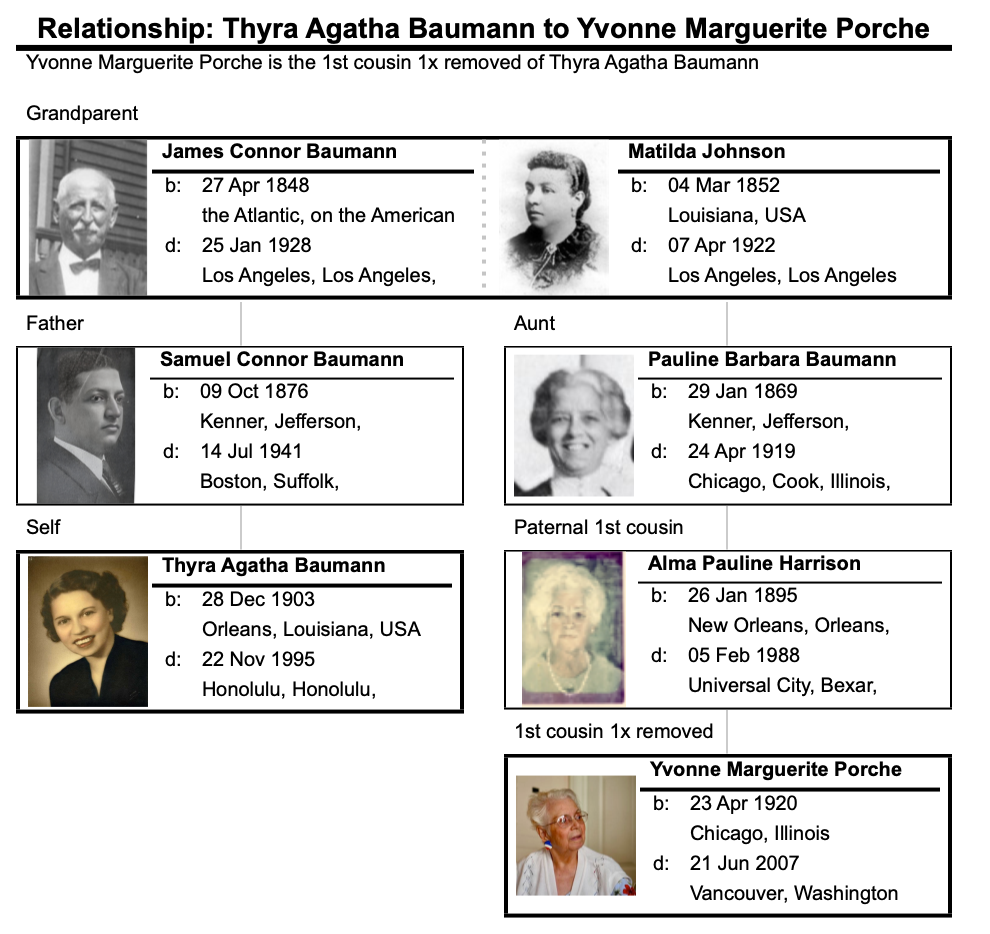
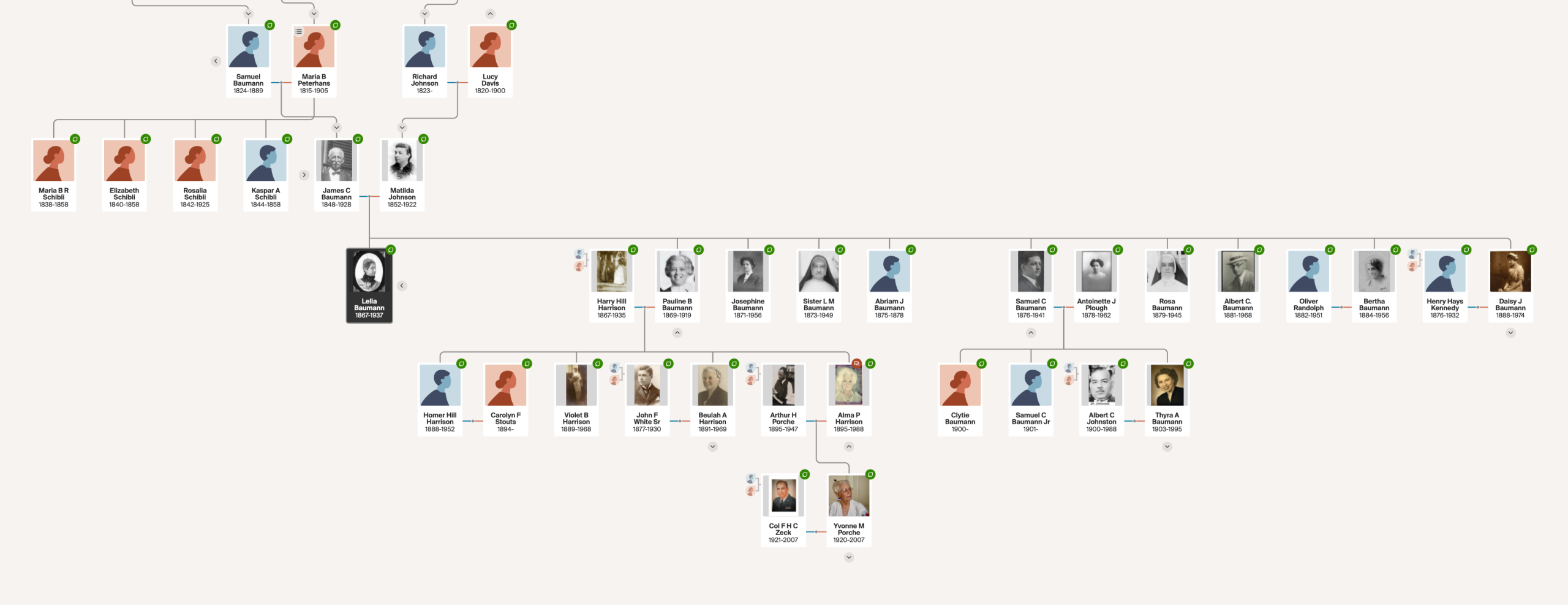
The book “Lost Boundaries” by W.L. White tells the story of The Johnston family. Dr Albert Chandler Johnston Jr. was a respected physician who was rejected by the Navy early in WW II because he had African American ancestry.  Albert’s wife was Thyra Agatha Baumann. Albert decided it was time to tell his oldest son their family secret, that they were all African American passing as white. Our family connection to Thyra is below. Alma Pauline Harrison (Yvonne’s mother) is Thyra’s first cousin. Thyra and Alma’s grandparents are James Connor Baumann and Matilda Johnson.  Thyra and Albert had 4 children: Albert Jr (1926), Donald (1929), Ann (1931) and Paul (1935). The story was made into a movie in 1949 that you can stream titled Lost Boundaries.


Click the image below to enlarge the family tree.  
_____________________________________________________________________________   

LUCY DAVIS
To better understand Thyra and Alma’s heritage I started with Matilda Johnson’s mother, Lucy Davis. Born about 1822 in Virginia (or North Carolina), she died 21 Jul 1900 in New Orleans. Matilda’s father is assumed to be Richard Johnson born Jan 1823 in Kentucky. I have no documents to back this up, therefore this is as far back as I can trace Matilda’s ancestors. Another brick wall…

Click here for the 1870 Census for Lucy starting on page 1 line 36 and continuing on page 2. This census is taken in Kenner, county of Jefferson, Louisiana. Lucy Davis age 49 is listed as Black and her occupation is a servant and she was born in North Carolina. Samuel Baumann is the head of the family at age 50 and his wife Barbara is 55.  James is aged 22 and a grocer, Matilda (8), Pauline (2), Leilia (3). Everyone else’s race is listed as White. 

Click here to view the New Orleans 1880 Census (line 20) for Lucy Johnson, age 60. She is living alone. Her birthplace is recorded as Virginia. Both of her parents were born in Virginia. I would assume that this birth place is correct since anyone could have filled in the blanks for the census taker in 1870 and guessed at Lucy’s birth place. Race: Black, Occupation: Keeping House and marital status: Widowed. Her address is 183 W 7th between David St and Patrick St. Click here to download Lucy Davis’ family tree descendant Lucy Davis Descendant Report report. 

_____________________________________________________________________________
MATILDA JOHNSON BAUMANN (Lucy’s daughter)
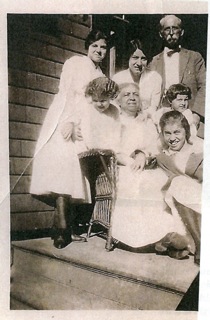
The image to the left is: Kathleen Kennedy born 1915 (daughter of Daisy), Bertha, James, Daisy Baumann and Oliver Randolph (Bertha’s husband). Matilda Johnson Baumann died 7 Apr 1922.

Matilda Johnson (1852-1922) and James Connor Baumann (1848-1928) had the following children: Leila (1867), Pauline Barbara (1869), Josephine Cornelia Amelia (1871), Louisa Marie (1873), Abriam James (1875), Samuel Connor (1876), Rosa (1879), Albert C. (1881), Bertha (1884) and Daisy Juliette (1888).  

In the 1870 census Samuel Baumann is the head of the family at age 50 and his wife Barbara is 55.  James is aged 22 and a grocer, Matilda (8-this is incorrect), Pauline (2), Leilia (3). Everyone’s race is listed as White. Also on the census is Lucy Davis age 49 and listed as Black and her occupation is a servant. 

Click here for the 1880 Census which shows (mid page) Matilda’s occupation: housekeeper, marital status: single, relation to head of house: wife. 

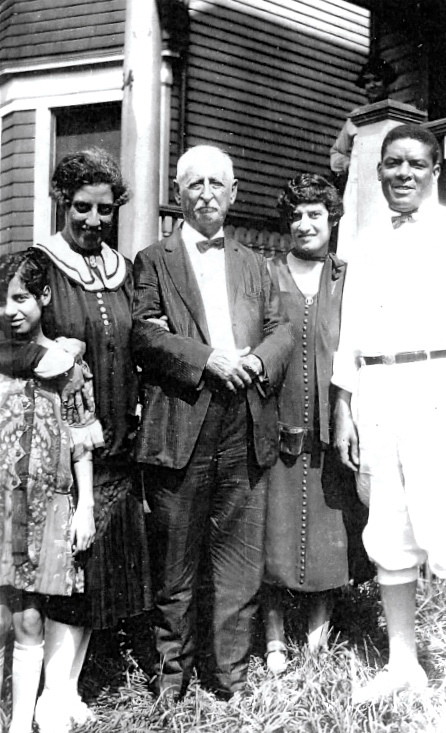
To the left is a photo taken about 1890 of James & Matilda with some of their daughters. Click here for the 14 Jun 1888 marriage story of Matilda Johnson and James Connor, written by James Connor. They were married in Jefferson Parish, LA by Rev L.J. Kennedy. It was legal for a white man to marry a mulatto woman in New Orleans in 1888. There was a brief period (1868-1894) when Louisiana’s interracial marriage bans were suspended.  In 1910 the state criminalized interracial cohabitation as a felony. The bans remained until the US Supreme Court overturned them in 1967.

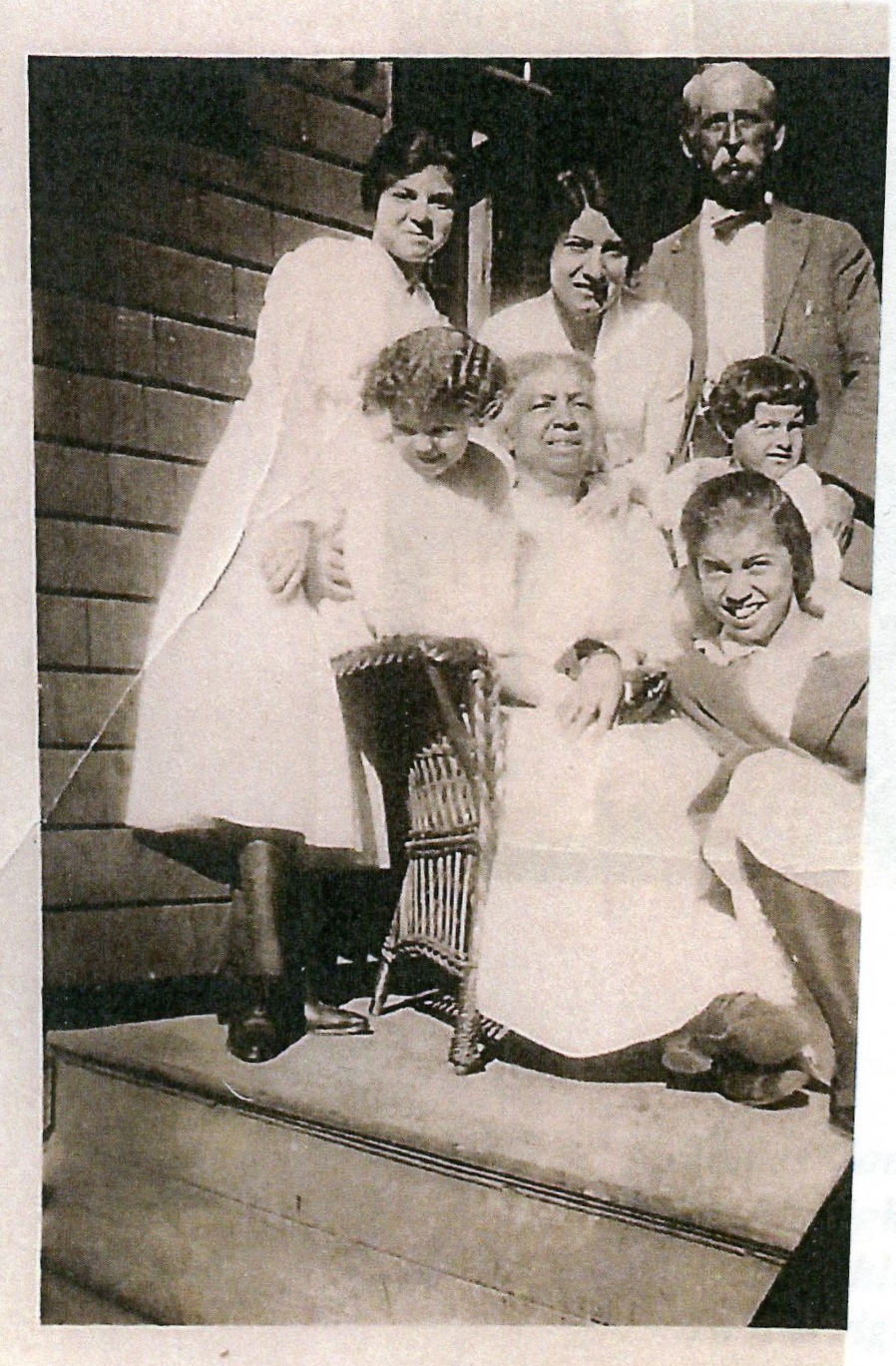
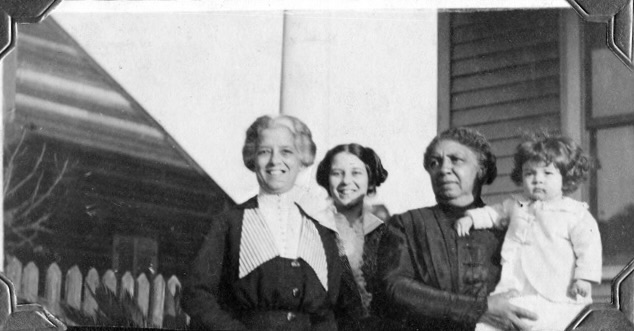
Below is a 4 generation photo taken about 1913. Left to right: Pauline Barbara and her daughter Beulah Aloysius (Alma’s sister), Pauline’s mother Matilda and Beulah’s son John Franklin White Jr.

_____________________________________________________________________________

THYRA AGATHA BAUMANN JOHNSTON (Lucy’s great granddaughter)

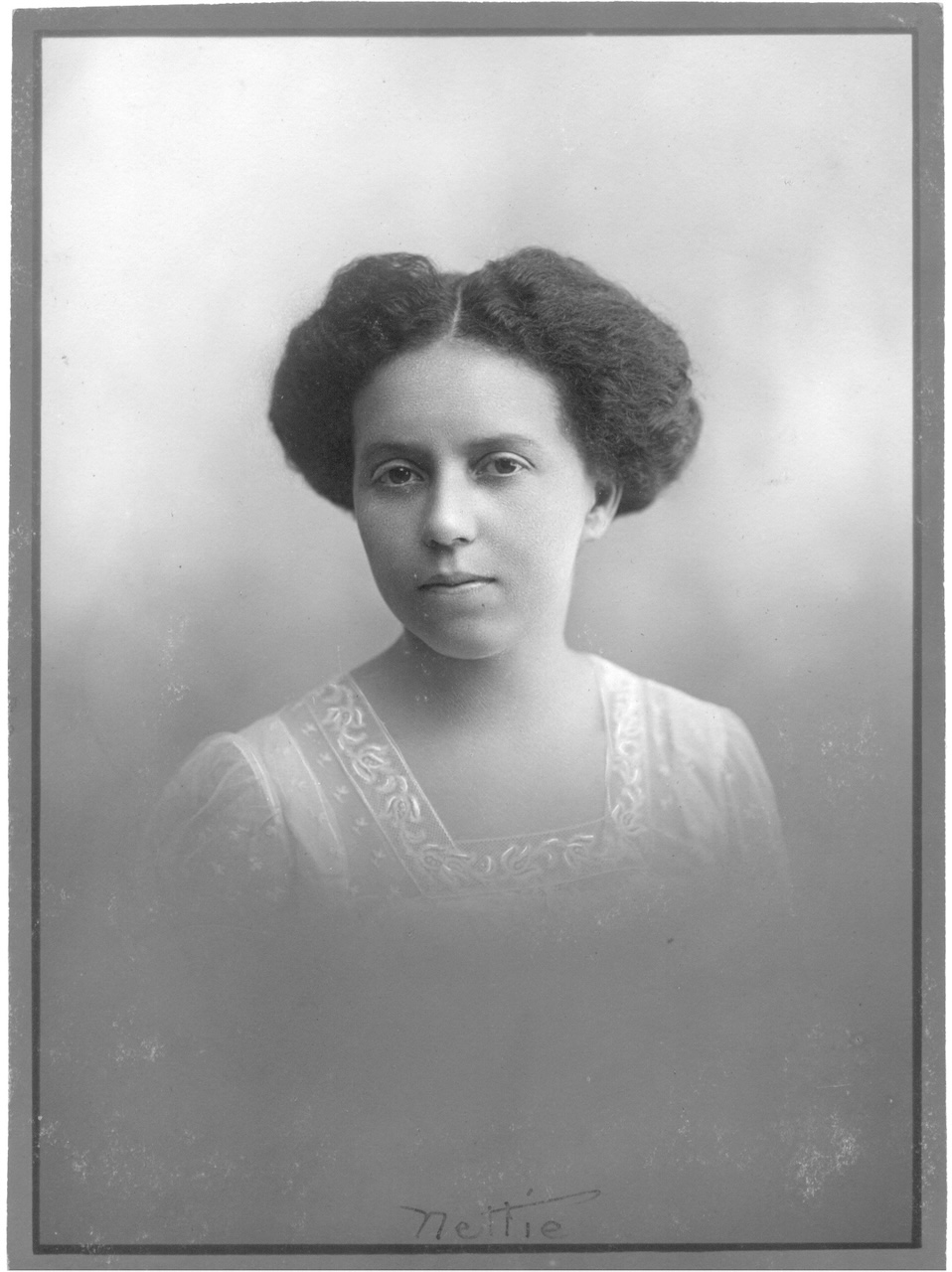
The 1910 census for Thrya (age 6) lists her race as Mulatto and had an address at 720 Lyon St. in New Orleans.  Thrya was living with her grandparents James (61) and Matilda (58) along with their daughter Daisy (21). Also in the home is their son Samuel (34), Samuel’s wife Nettie (Antoinette Juanita Plough 32) and Samuel and Nettie’s children: Clytie (10), Samuel C. Jr (9) and Thyra (7). All are listed Mulatto except James.  Click here to view the census. In the 1940 census the families race is recorded as White. The photo to the left is Thrya’s mother Antoinette Plough. 

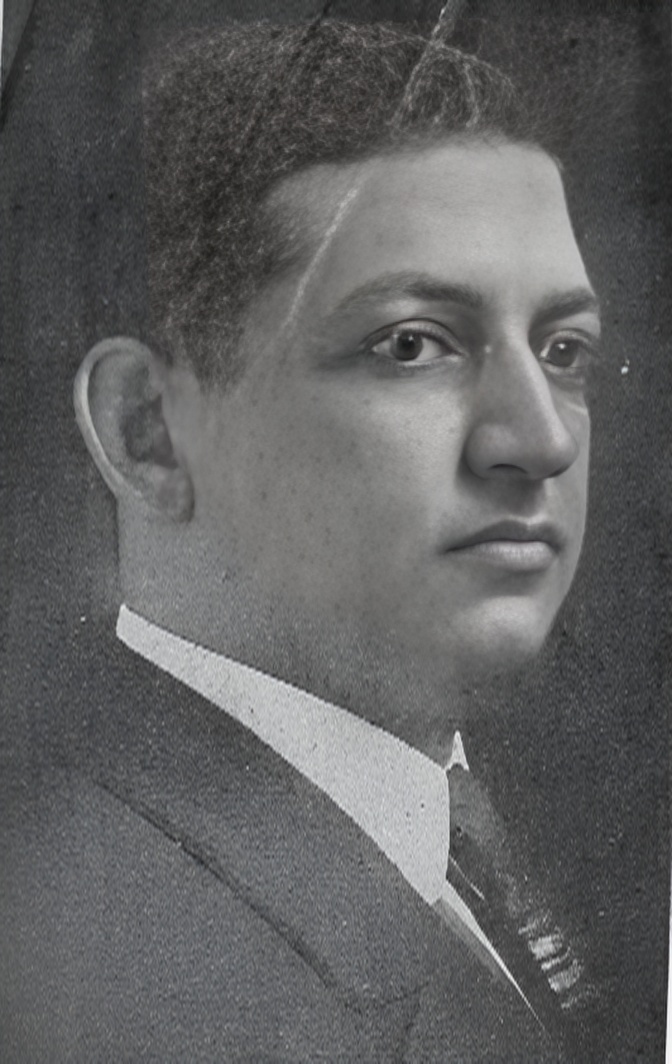
The 1950 census for Thyra (age 46) lists her race as Black. She was living at 146 Washington in Keene, New Hampshire and with her husband Dr. Albert C (age 49 race Black), and their children Albert C Jr, and Ann. Albert was a physician in a hospital.  Click here to review the census, lines 2-5.  The photo to the left is Thyra’s father Samuel Connor Baumann.

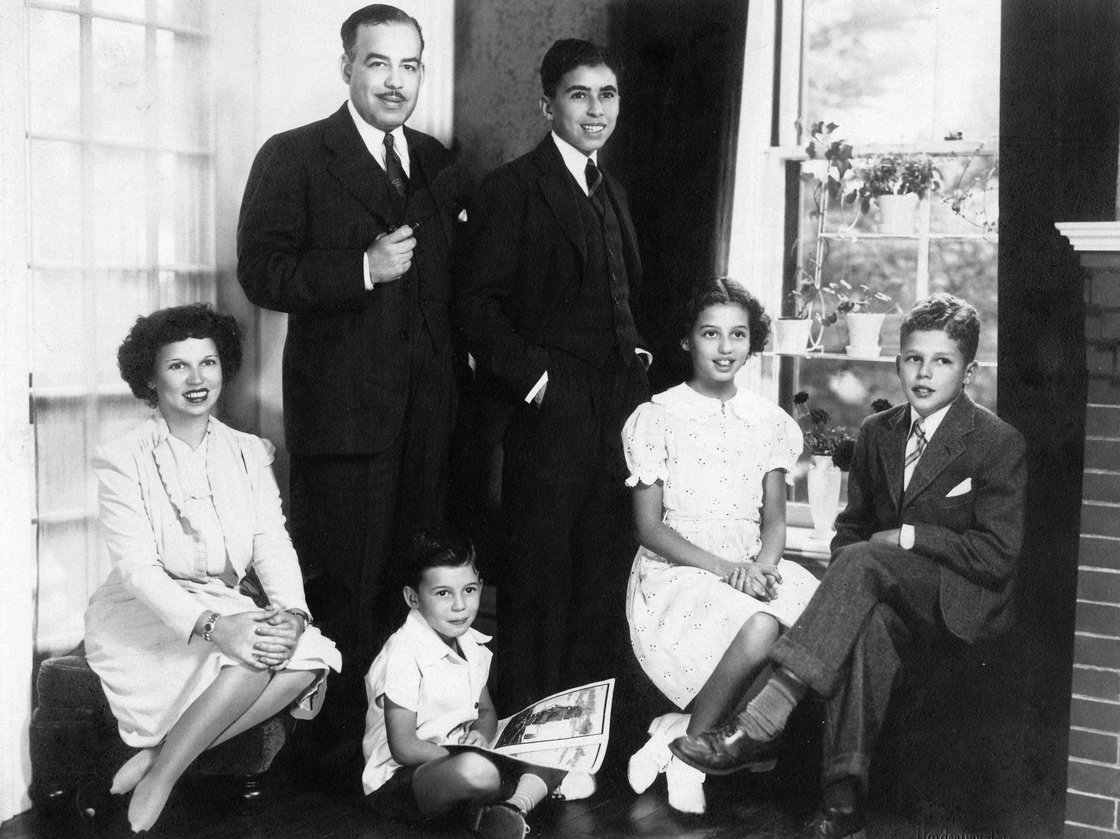
The book referred to above “Lost Boundaries” was published in 1947. It focused on Thyra and Dr Albert’s son Albert who was 16 at the time and the complicated feelings that he struggled with in the next few years as he came to terms with his heritage. The book is out of publication now. The photo below is Thyra & Albert’s family.

_____________________________________________________________________________

JAMES CONNOR BAUMANN (Thyra’s grandfather)
James Connor Baumann was born 27 April 1848 crossing the Atlantic Ocean on the ship “James Corner”. James was appointed in 1870 as Kennerville’s School Director, in 1880 he was mayor of Kenner and by 1886 was a clerk of the 26th Judicial Court in Kennerville. He was nominated to be a Justice of the Peace at the Republican convention soon after.  

In the 1900 census (lines 7-16) the family was living at 720 Lyons St in New Orleans, county of Orleans in Louisiana. James is 52 and the record states that he has been married to Matilda since 1868. There is no record for this ceremony. The family are all listed as White including James’ granddaughter Clytie. 

This newspaper article from 1891 reports that James Baumann was shot at as he answered his front door of his Kenner home. The family would move to New Orleans the next day.

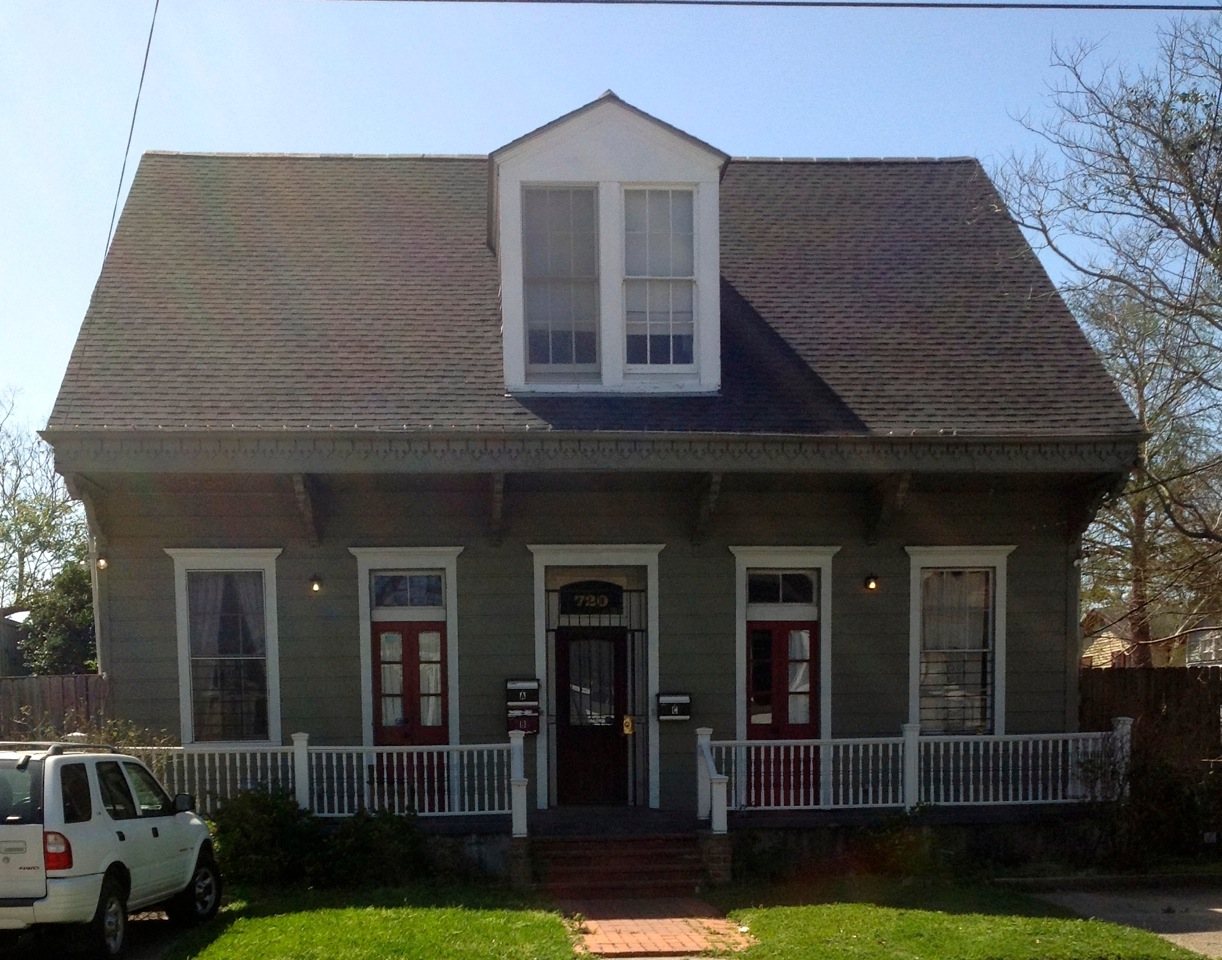
The photo to the left is the home of Matilda and James listed in the 1895 city directory at 720 Lyons St, New Orleans.  On 25 September 1892 James was arrested for instigating the attempted assassination of Judge Long. He was later cleared of the charges. 
 
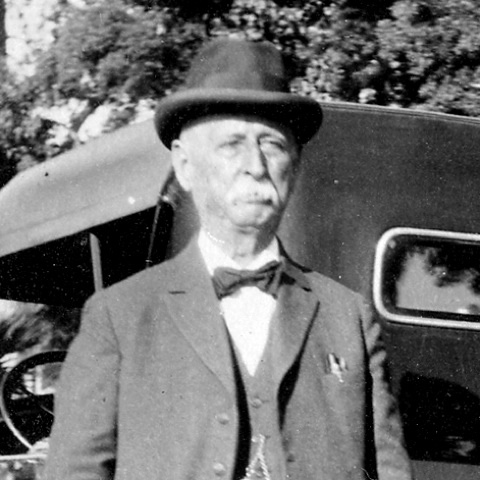
In my correspondence with family members I’ve conversed with Leslie.  Her grandmother Violet and Alma were sisters. She mentioned that a family member donated James Connor Baumann’s scrapbook and family papers to the Newberry Library in Chicago. They have not yet been digitized but I’ll keep watching for them. Maybe my next trip to Chicago will include a trip to the Newberry. I’ve always wanted to pop in there. Thank you for the photos and family history Leslie.

James’ scrapbook and family papers were the research used by author Craig Bauer, Ph.D. Professor of History and Political Science at Our Lady of Holy Cross College in New Orleans.  The excerpts in this post are found in Mr Bauer’s book “An Untractable Country The History of Kenner”. 

__________________________________________________________________________
SAMUEL BAUMANN SR. & MARIA BARBARA SCHIBLI PETERHANS
(Thyra’s great grandparents)
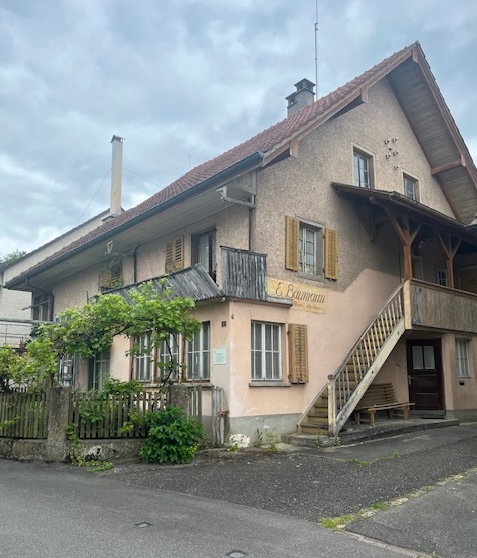
Leslie traveled to Stilli several years ago and visited the Baumann home. Samuel Baumann was born in Niederlenz (close to Stilli) however since his ancestors lived in Stilli, Samuel was  a citizen of Stilli as well. 

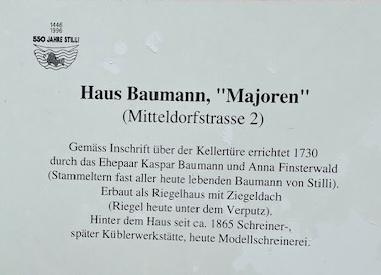
There is a historic marker on the house and the translation text says: The home was built in 1730 by the married couple Kaspar Baumann and Anna Finsterwald. Built as a timber-framed house with a tiled roof. Behind the house, since about 1865, was a carpenter’s workshop, later a cooper’s workshop, today a model carpentry workshop.

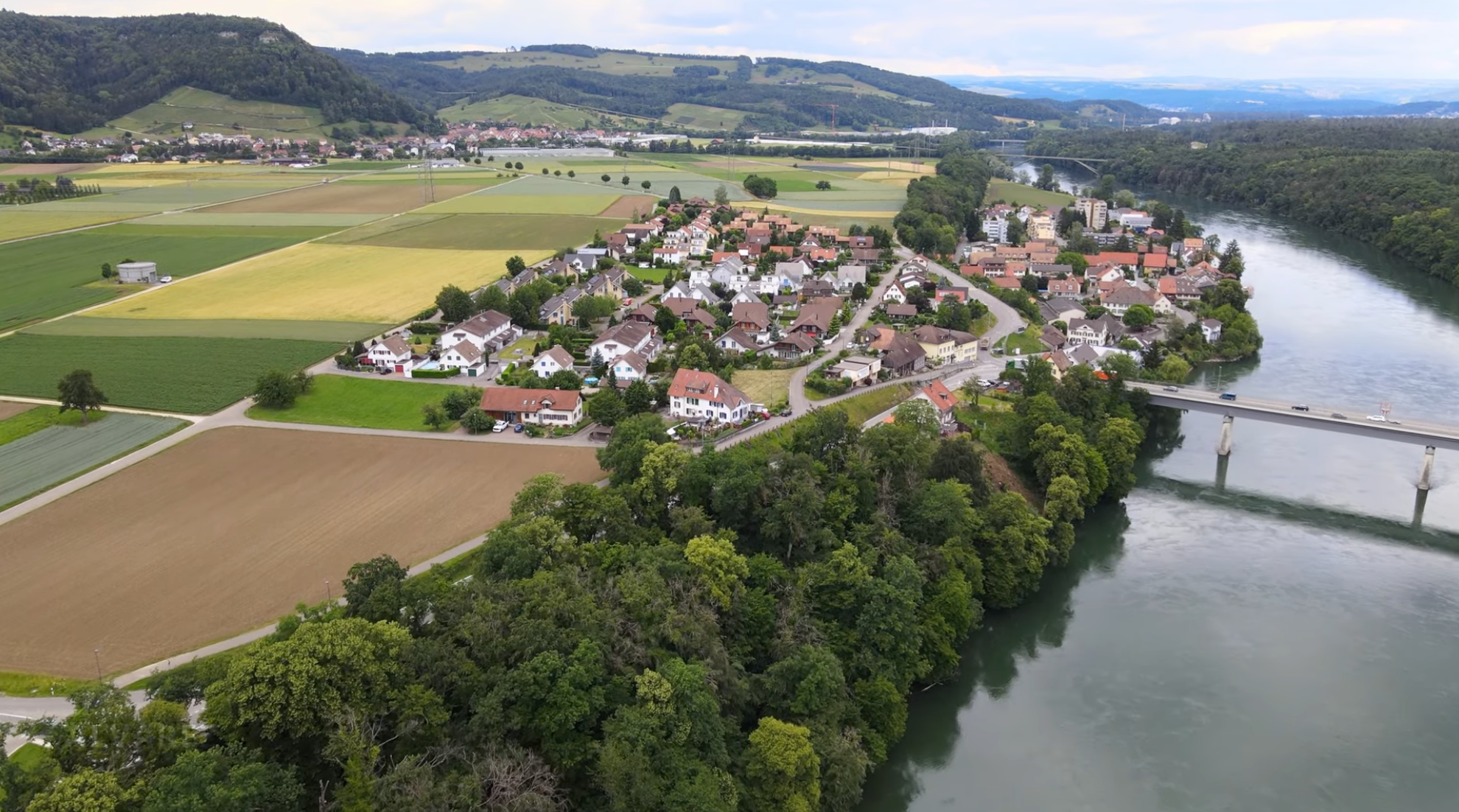
Click here for in-depth family tree for Baumann Family dating back to 1492. This was documented by Dr. Max Baumann a professor of history living in Stilli, Switzerland. I just received an email from Max. He sent me a detailed article that he wrote many years ago which was printed in a yearbook. Click here to read the story of how Samuel and Barbara decided to begin a new life in America. It was sent to me in German but the google was kind enough to translate it. Thank you for sharing this story Max. The photo below is Stilli, Switzerland.

Samuel Baumann and Maria Barbara Perterhans Schibli left the town of Stilli for a better life. They were very poor. They arrived in New Orleans 18 May 1848. The town of Kenner would soon be established and would recruit families from Europe to purchase land in the newly developing town. Samuel purchased two lots and opened a large livery stable which was burned down by jealous competitors. Click here to read the excerpt from the book “An Untractable Country, The History of Kenner, Louisiana” by Craig A. Bauer. Craig describes Samuel and Barbara setting down roots in Louisiana. The community lost a staggering amount of people due to the yellow fever epidemic in 1853 including 2 of Barbara’s children. ________________________________________________________________

KENNER, LOUISIANA 
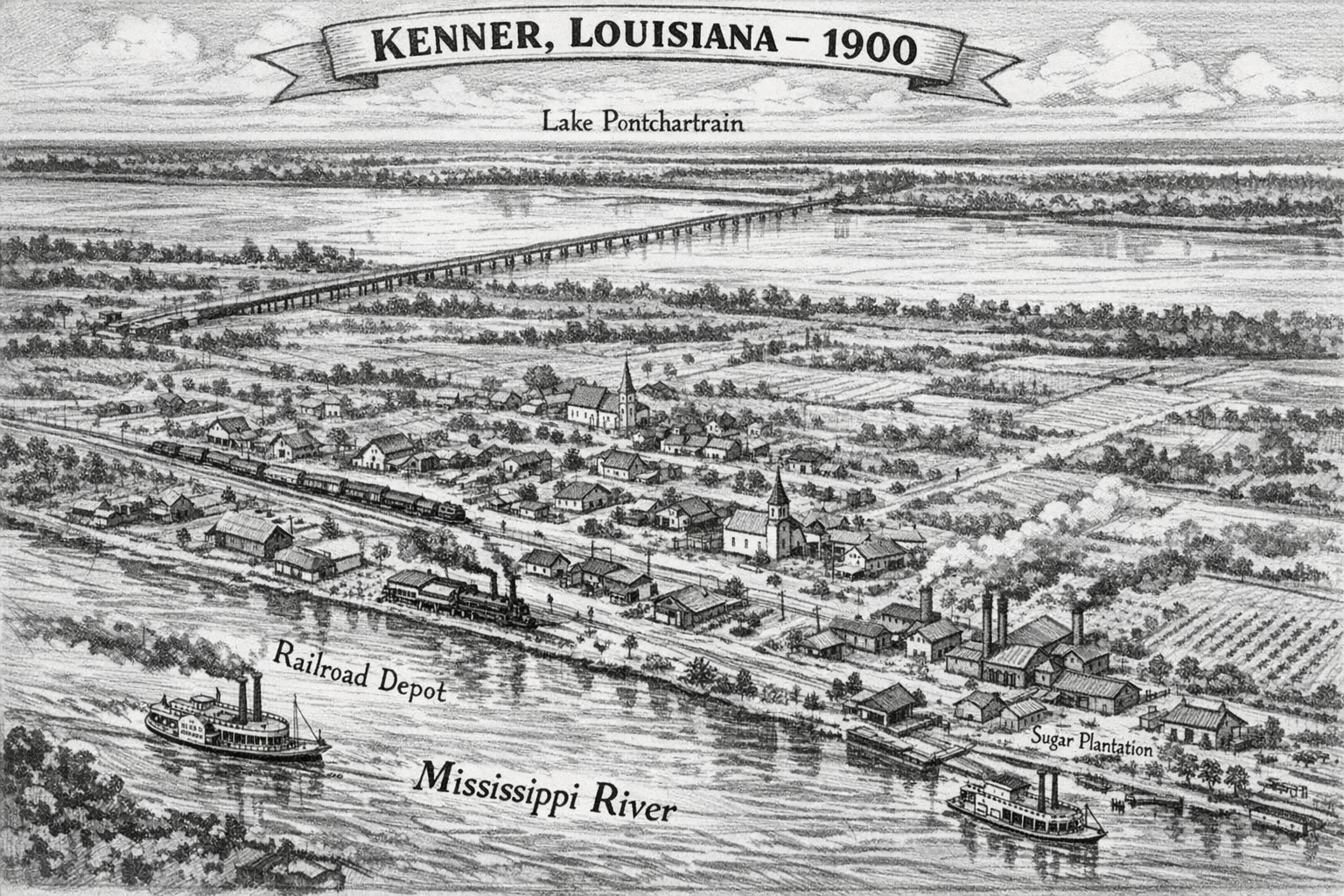
I enjoyed reading Craig’s book about Kenner and learned a lot about the unforgiving land. The town is situated between the Mississippi River and Lake Pontchartrain, 30 minutes west of New Orleans. In the early 1700’s the first houses were being built and farmers were deciding which crops were best to raise. Indigo, rice and sugar cane seemed to do well however farmers were constantly battling flooding from the lake or the river and felt the strain of wondering which levee would fail next. William Kenner became one of the area’s wealthy settlers and had 3 large plantations which he would pass down to his children.

In the 1850’s the Great Northern Railroad laid track through Kenner. William Kenner’s two sons Philip Minor Kenner and William Butler Kenner thought it would be a good financial move to shift gears. They had given permission for part of the railroad track to be laid through one of their three plantations. The brothers thought it would be more profitable to build a town and sell plots of land rather than to continue farming. As time went on what was left of the plantations was held by Citizens Bank of Louisiana. The bank sold the land to John Deloss Rouse and James Connor Baumann. Maybe they bought the land at an auction. The men sold the land for $11,000.00 two months after they purchased it.

James became a very popular politician on the Republican ticket. He was an advocate for equal education for all the children in the community. The Baumann’s stayed in Kenner until December 5, 1891 when political enemies riddled the Baumann home with bullets. They moved to New Orleans the next day. Click here to read the story in an excerpt from the book “An Untractable Country, The History of Kenner, Louisiana”.  

James was unable to escape the tentacles of politics in New Orleans. Click here to read an excerpt about his arrest in 1892.  Again, this is scanned from the book “An Untractable Country”. 

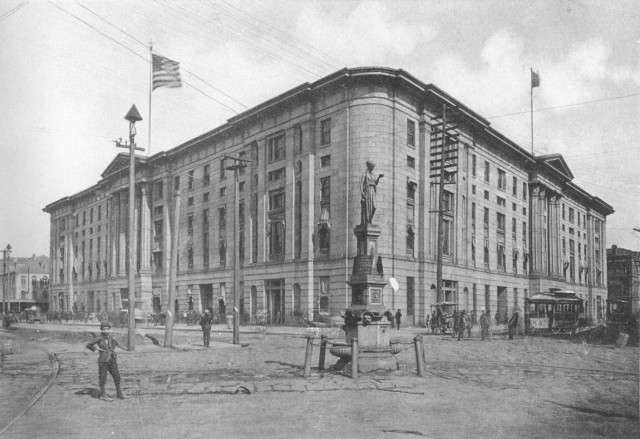
In New Orleans James became a real estate agent for a few years. In January 1900 he was appointed the Kenner county Shipping Commissioner. He was 67 when he retired in 1915. After retirement he moved to Los Angeles with Matilda where they passed away.

 
Click here to view papers typed by James Baumann of his Memoir. The pages are in sequence except page 10 and 11 which appear as the 2nd and 3rd page. 

It’s been a great adventure taking a step back in time to see how our ancestors began life in this new country. Can’t wait to see where I Time Travel next. 


May20th2013

Abigail Rose’s Baptism

by  Phyllis Zeck

Abigail Rose Baptism

Abigail Rose Miller

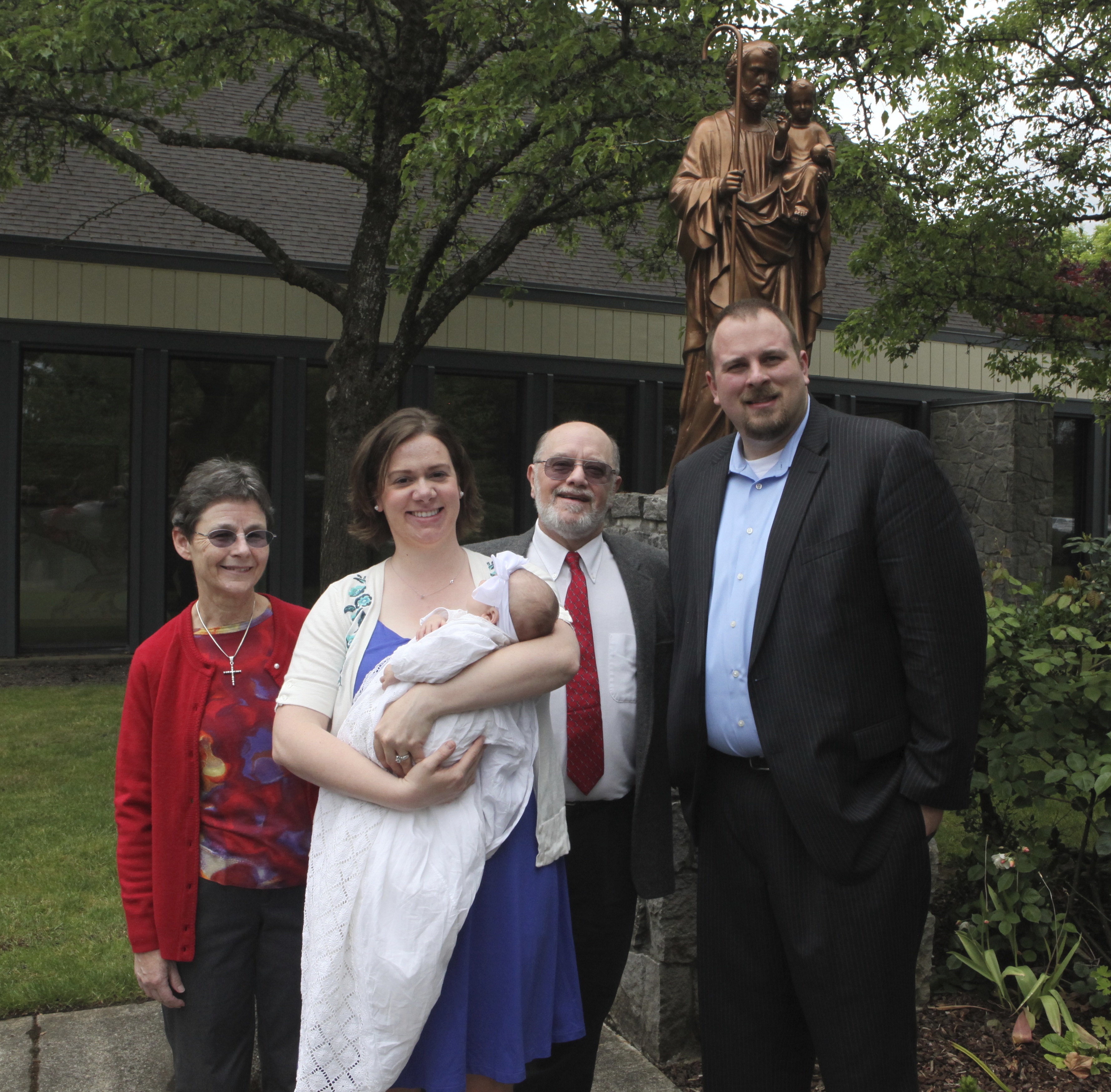
On Sunday May 19th, 2013 Abigail was baptized at St. Joseph Catholic Church in Vancouver, Washington.  Ashley and Matt asked my brother Rob and his wife Judy to be Abby’s Godparents.  Rob holds a special place in Ashley’s heart as he is her Godfather.   Rob was with us at St Mary’s Cathedral when Ashley was a senior in high school and she was confirmed.  Two years ago Rob gave a reading at St Mary’s Cathedral during Ashley and Matt’s wedding ceremony.   

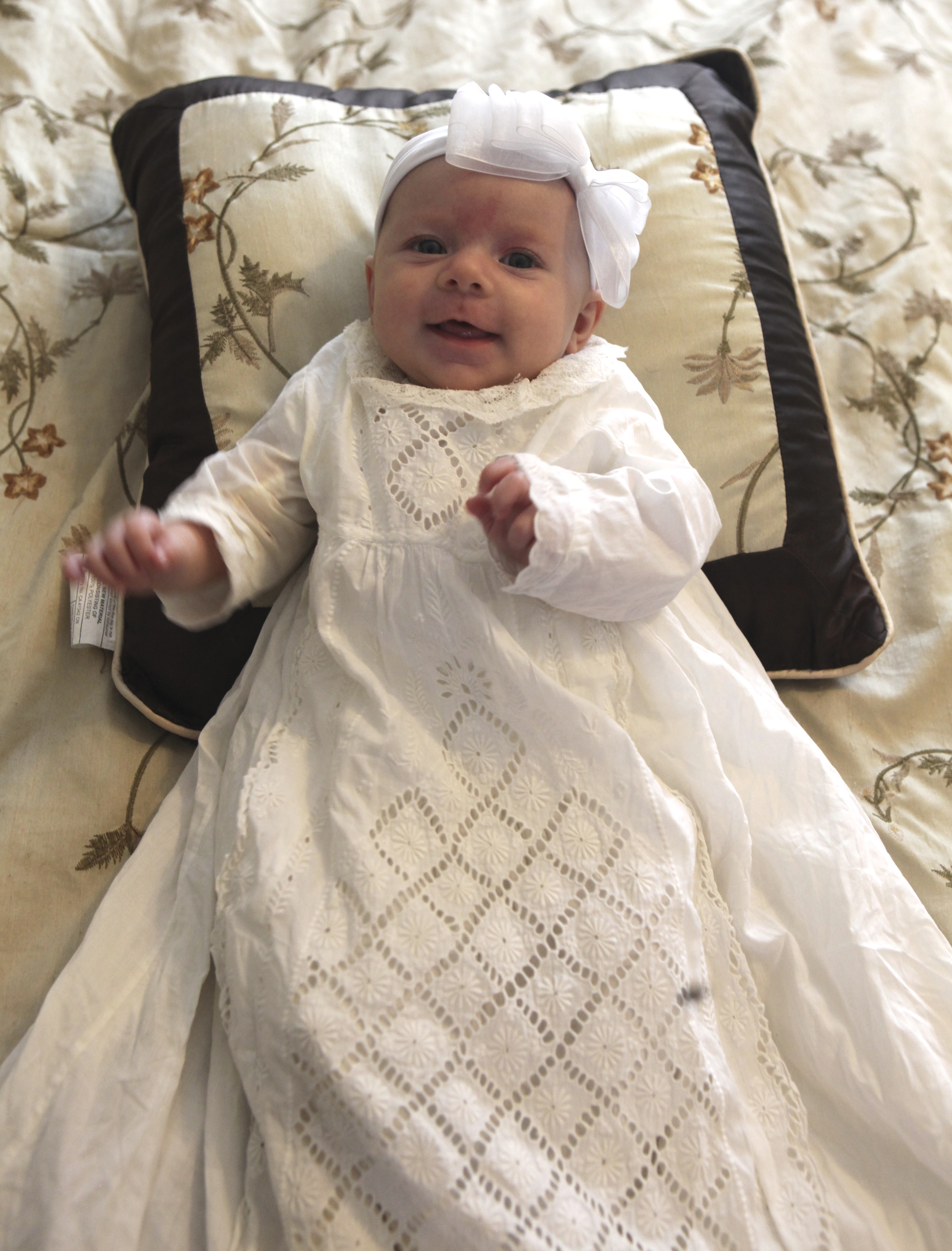
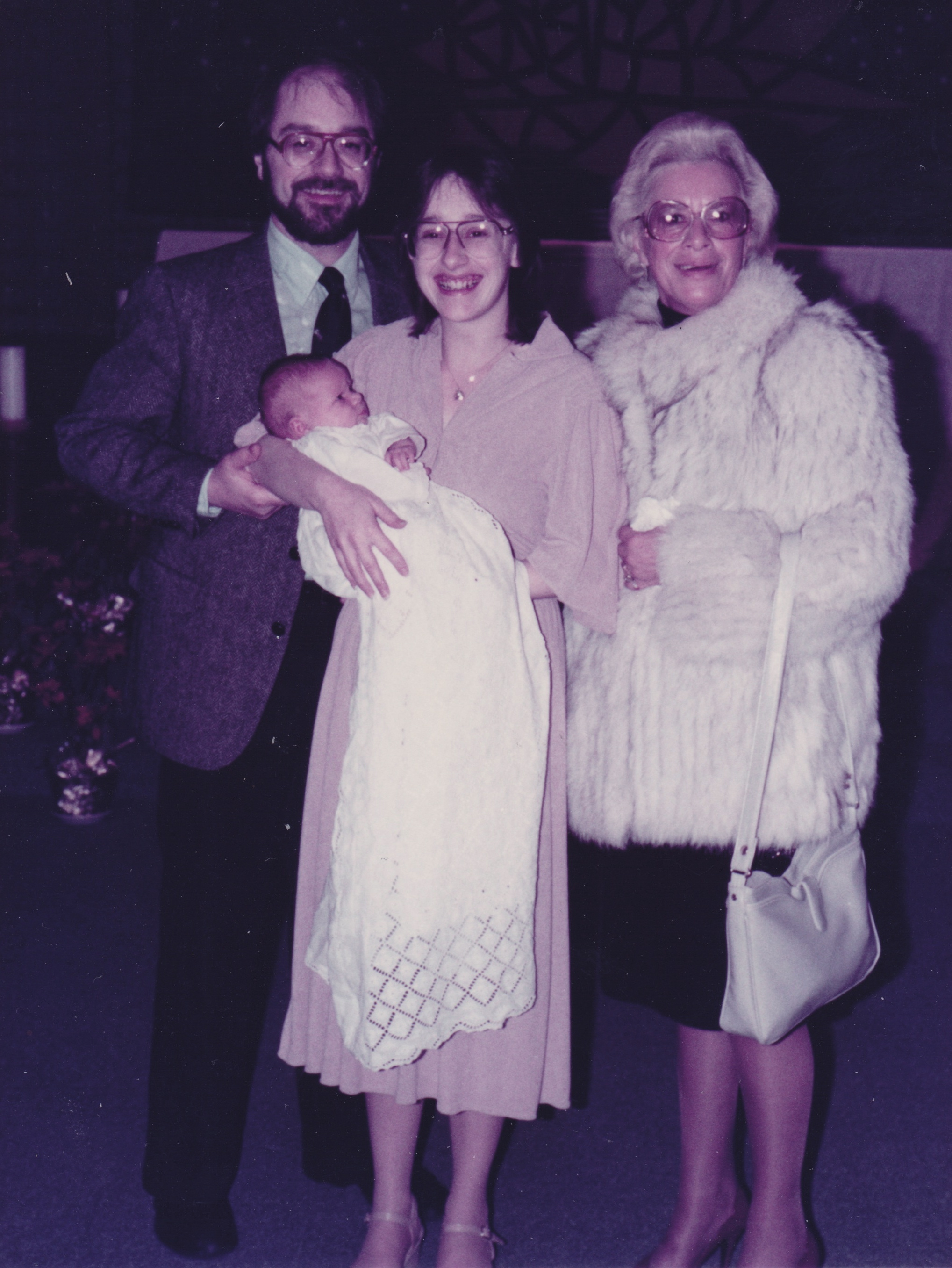
Ashley was baptized at St. Francis Church in Portland Oregon in 1984.  The gown that Ashley and Abigail wore is a heirloom from my mother-in-law Yvonne’s family. The children of Pauline Baumann and Harry Hill Harrison wore this gown; Homer born 1888, Violet born 1889, Beulah born 1891, and Alma born 1895.  Alma is Abigail’s great great grandmother.  This gown at least 125 years old.    Click here to read about the Harrison family in a previous blog post.  
 

Ashley with her Godparents and my mother 1984

Ashley with her Godparents (my brother Rob and my sister Holly) and my mother 1984

Abby with her godparents and parents

Abby with her godparents & parents


Other babies who were baptized in this gown were Frank & Don, John & Brian, Don Jr & Heidi.  My mother-in-law Yvonne left us a note telling us she used to dress her Mary Jane dolls in the gown and said that the gown was not used for her generation.  Yvonne asked that this gown be passed down with love and respect.

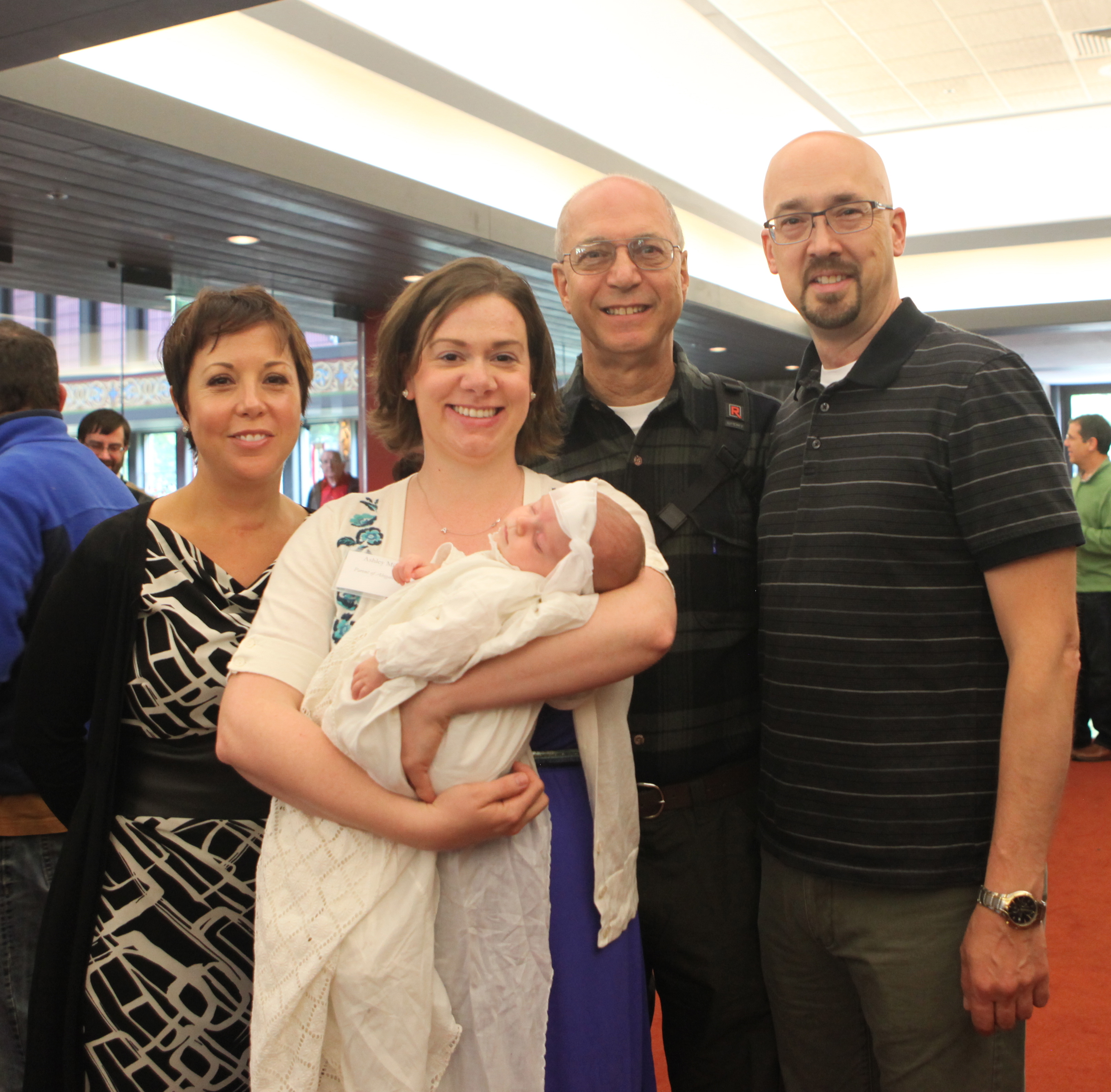
Heidi, Ashley, Don Sr, Don Jr

Heidi, Ashley, Don Sr, Don Jr

For this sacred ceremony Abigail Rose wore the same treasured gown as her ancestors.  And so precious Abby, may the blessings of the Lord be with you on this happy day and always!


Apr28th2013

Yvonne Marguerite Porche Zeck

by  Phyllis Zeck

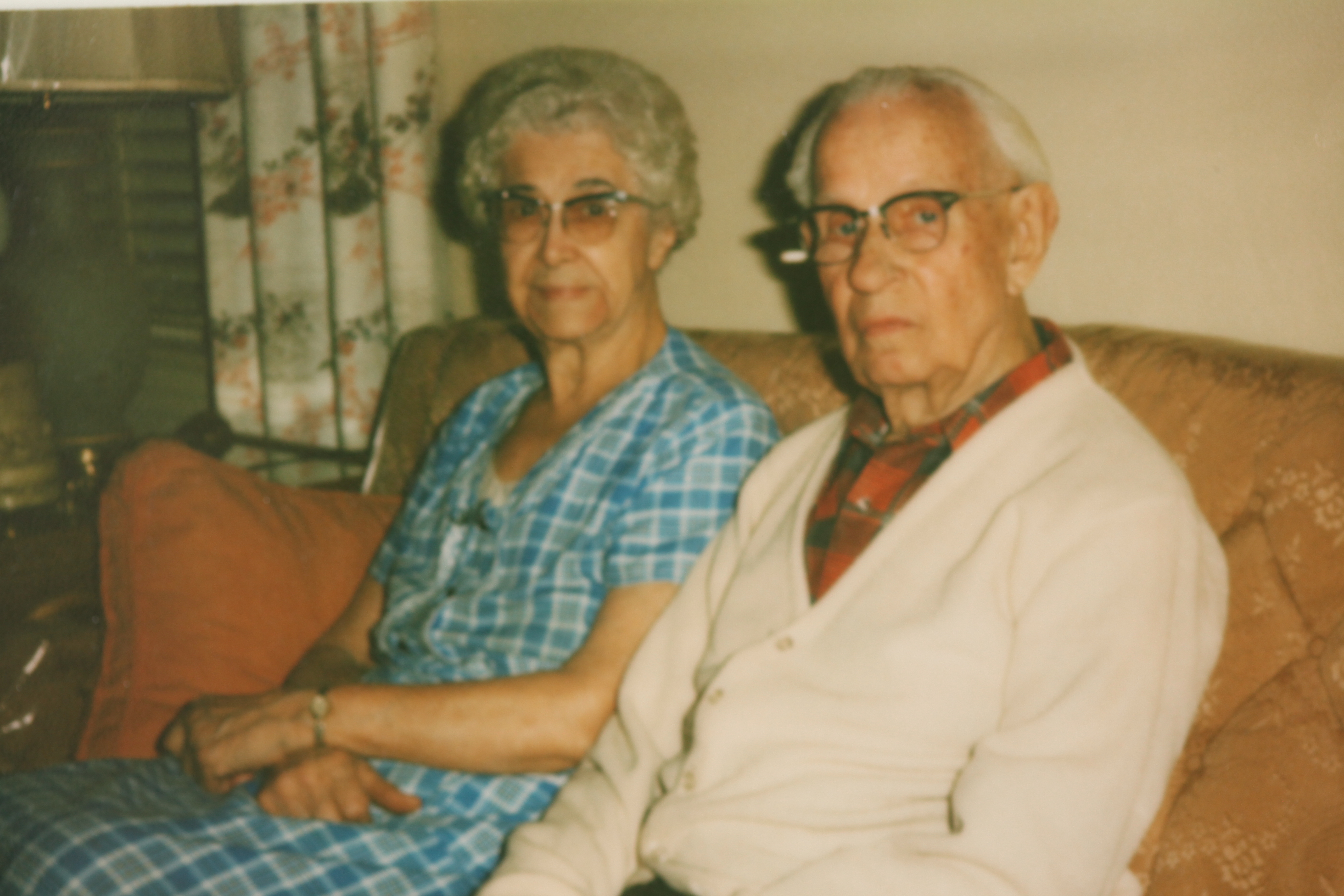
Yvonne Porche My mother-in-law was born in 23 Apr 1920 in Chicago, Illinois, she passed away 21 Jun 2007 in Vancouver, WA.  Yvonne had no siblings. She received her Bachelor of Arts degree from the University of Illinois and worked for a brief time as a social worker.  Yvonne married Francis H. C. Zeck on 20 Jan 1943 at the age of 22.  Her first son Francis Harry was born nine months later, and her second son Donald Arthur (my husband) was born in 1946.  Yvonne traveled the world with her husband Harry (see post about Francis H. C. Zeck) and was a loving and supportive military wife. Yvonne’s father was Arthur Harold Porche born 10 Feb 1895 in New Orleans, Louisiana.  Arthur’s WW II draft card lists his address at 424 W. 60th Place in Chicago.  His employer was Illinois Iron and Bolt, his job title was a Division Sales Manager, and his work address was 918 S. Michigan Ave.  Arthur was killed in January 1947 in a small engine airplane crash.

Harry and Yvonne

Harry and Yvonne

Yvonne Porche Univ of Illinois

Yvonne Porche Univ of Illinois

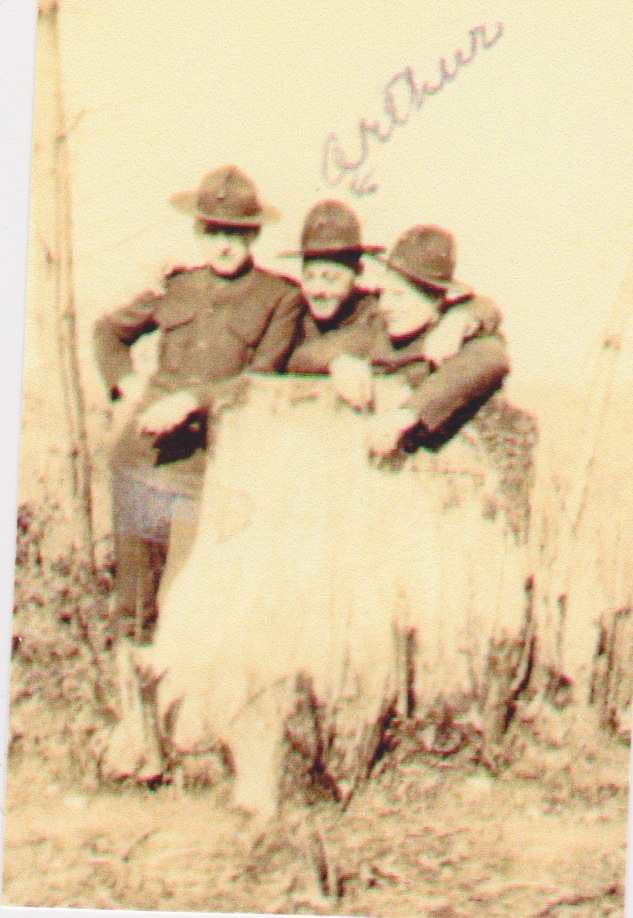
The following is taken from an article in the Stars and Stripes newspaper; “Private Plane Explodes in Indiana, Killing 5.  Rensselaer Indiana Jan 26 1947 (his wife Alma’s birthday).  The pilot and four passengers were killed last night in the explosion and crash of a twin-engined Beechcraft private plane in a barnyard six miles southeast of Rensselaer.”  Arthur’s father was named J. George Porche born in 1856 in Louisiana and his mother was Amelia Tervalon born approx 1856.  Arthur had 6 siblings Edna, May, George, Stanley, Mildred, and Clifford.  Click here to read an article about the crash from The Arlington Heights Herald 31 Jan 1947. Arthur enlisted in the U.S. Marine Corp on 03 Jun 1917.  Frank remembers his mother telling him that “Arthur was sent to France where he met with family members and served as an interpreter for the US Forces, and that he was wounded in the Battle of Belleau Wood”.  The muster roll from Sept 1918 listed Arthur #122479 Porche “trans. to S.O.S. Hospital”.  Click here to read the Muster Roll.  Most of the men listed with him on the muster roll have the following remarks “slightly wounded in action during attack on Hill 160.600 yds NW of Tigny Prov of the Aisne, France”.

Arthur Harold Porche

Arthur Harold Porche

Arthur Porche

Arthur Porche

The Battle of Belleau Wood was the first real taste of battle for the US Marines in WWI with General Pershing calling Belleau Wood the most important battle fought by US forces since the US Civil War.  Click here to read more about the Battle of Belleau Wood 1918. Yvonne’s mother was Alma Pauline Harrison born 26 Jan 1895 in New Orleans, Louisiana. Alma died in 1987 at the age of 92.  Alma had two sisters Violet and Beulah and she had a brother named Homer.   In 2011 email correspondence began

Sisters Alma and Beulah Harrison

Sisters Alma and Beulah

between Shirley and I.  Shirley is the granddaughter of Beulah.  Alma (Don’s grandmother) and Beulah are sisters.  Alma and Beulah’s parents were Pauline Barbara Baumann and Harry Hill Harrison.  Shirley has an extensive family tree account at Ancestry.com and she invited me to look at her tree, documents, and photos.  She has graciously agreed to share some of her research in this blog post.  I want to extend to her my sincere appreciation. Alma and Beulah’s grandparents were Matilda Johnson (1852-1922) and James Connor Baumann (1848-1928).  James Baumann was born on  27 Apr 1848 on the Atlantic Ocean aboard the ship the “James Corner”.  Thus he was given the name James Connor.  His parents Samuel Baumann and Maria Barbara Peterhans were immigrating from Stilli, Switzerland to New Orleans, Louisiana arriving 18 May 1848.  Samuel left behind his parents, three brothers and two sisters.  James was 3 weeks old when the ship docked.

James Connor Baumann approx 1921

James Connor Baumann approx 1921

James and Matilda had 10 children.  On 30 Jan 1870 James was appointed a Kennerville school director. The town of Kenner is 13 miles west of New Orleans.  In 1880 James Baumann was elected Mayor of Kenner running for the Republican party.  The 1887 city directory lists James as a clerk for the 26th Judicial Court for Kennerville.  In 1891 he was an assistant foreman at the U.S. Mint.  Then on 40 Dec 1891 James was shot at and decided to leave Kenner.  Click here to read the newspaper clipping about the mysterious assault. He moved his family to 720 Lyon St in New Orleans. On 26 Sep 1892 the New York Times printed an article that James was “arrested and charged with being an accessory to the attempted assassination of Judge Long in Gretna in July”.  He was taken to Gretna by Sheriff Landridge of Jefferson Parish and locked up.  Baumann’s arrest grows out of the confession of Dennis Richards, a negro who was arrested last Friday in swamp near Boutte.  Richards admits that he fired the shots which wounded Judge Long, but further says that Baumann offered him $100 to kill Long.

James & Matilda Baumann & family

James & Matilda Baumann and daughters approx 1890

He also says that he was in communication with Baumann after the shooting, and that Baumann promised to send him money and use his influence to get him out of the trouble.”   Click here to read the full article.  A second article describes the evidence in more detail, click here to read the article.  James was eventually acquitted and went on to become a real estate agent. Click here to read the article from the Times-Picayune dated 26 Jan 1893 which states there was not enough evidence to hold and charge him.  From 1900-1915 James was appointed a U.S. Shipping Commissioner at the U.S. Custom House.  A 1902 newspaper article details the damage done by a lightening strike at the Baumann home.  Click here to read the article. James passed away in 1928 at the age of 79 in Los Angeles which is where he is buried.  You can see that newspapers play a huge roll in a genealogists quest to know their ancestors. I wonder if my mother-in-law knew that her great grandfather led such an interesting life.  In some journal notes left to us Yvonne wrote “Alma’s grandfather James came to visit us in Chicago.  Oh, how impressed I was with his tall slim stature, thatch of pure white hair and the fact he was born on the Atlantic coming from Germany.  Alma seems to have been in awe of these grandparents who gave Alma her first pick of the fruit from their own trees.” Yvonne wrote “Alma’s father used to tell funny, outrageous tales.  He used to hide lemon drops in his pocket and permit me to search for them.”

Yvonne Porche Zeck

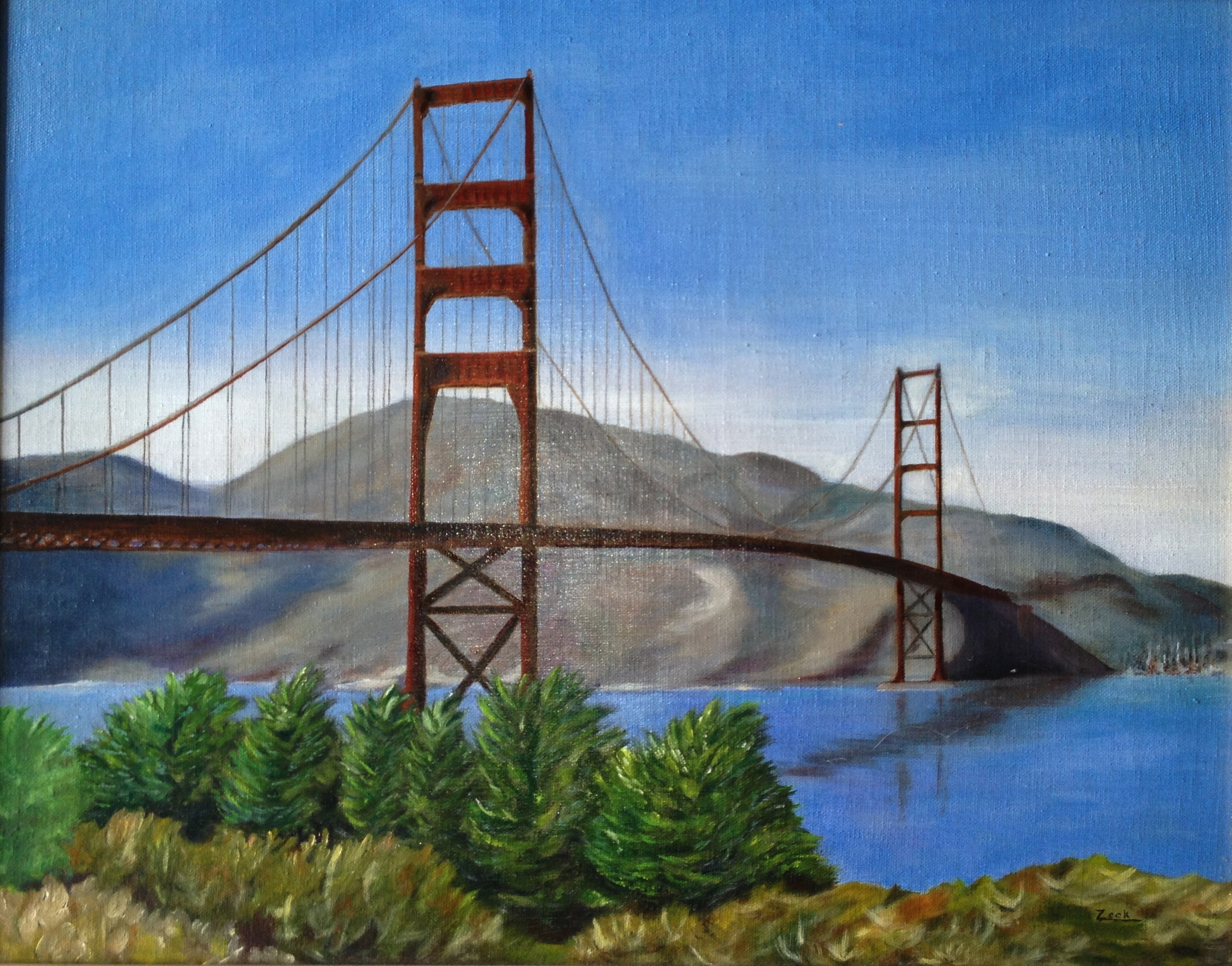
San Francisco painted by Yvonne

Yvonne had a insatiable appetite for books and the arts.  She loved letter writing and appreciated rich textured stationary. Mimi, as she was known after her first grandchild was born, was a talented painter.  She collected small charms from all over the world and always dressed in coordinating colors.  She must have had two dozen different colored Keds tennis shoes so that all of her outfits

Yvonne and Harry Zeck

Harry & Yvonne with Frank & Don

matched.  Mimi worked with miniatures and made a Christmas tree with miniature ornaments and gifts.  I put it on our table every year.  Mimi and Gramps loved to travel in their 40 foot Beaver motor coach.  Of all her passions I believe Mimi loved her family the most.


Yvonne, Harry & Don
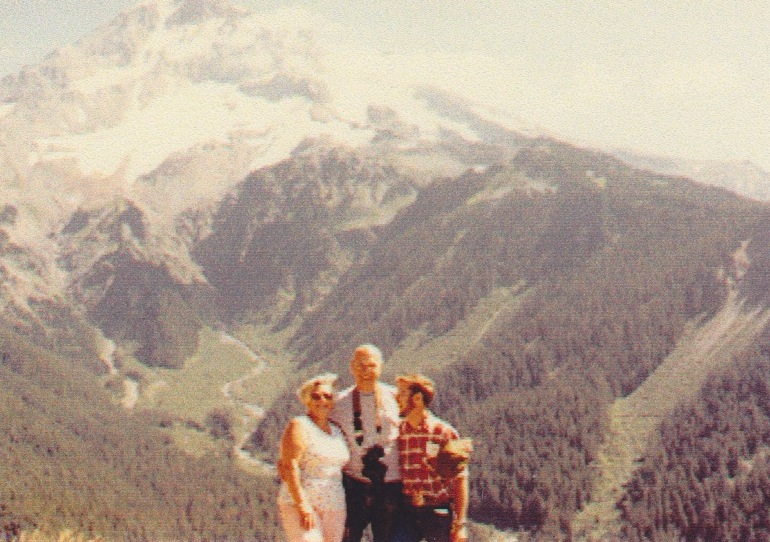
  Don remembers “I loved going to visit Mom.  Her smile would melt the snow on Mt Hood.  Mom always made me feel like a success.  She had to have everything in perfect order.  We’d go to her house for Sunday dinner and I would rearrange the order of the towels in the bathroom.  It drove her crazy!  Mimi kept in contact with her many life long friends over the years showing she appreciated the value of an old friend.” “I remember how Mom broke out in tears as we finished a hike on Mt. Hood.” Don continued.  “I showed her my secret valley and panoramic view.  Later she asked that her ashes be taken to that spot because it was so special.”   And that is exactly what Don and I did.


Apr14th2013

Colonel Francis Harry Charles Zeck

by  Phyllis Zeck

Colonel Francis Harry Charles Zeck

Francis Harry Charles Zeck

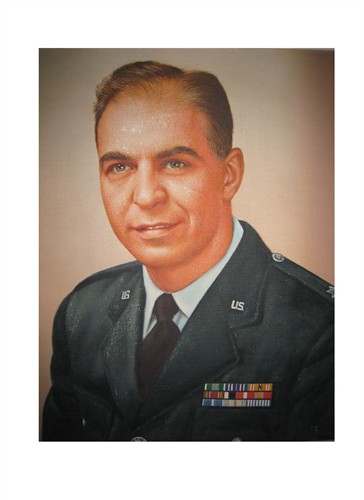
My father-in-law was known to all as “Colonel”.  He was an amazing man. People respected and admired him.  He was born 04 Oct 1921 and passed away 06 May 2007. Harry received his bachelors degree from the University of Illinois.  He entered the US Army in 1943 as a Sergeant and retired in 1974 as a Colonel from the US Air Force. In his 30 year carrier with the military Harry served during World War II, Korea, and Vietnam. The photo to the left was taken on the island of Espiritu Santo (east of Australia).  Harry said that the navy dropped them off on the island with rations of orange marmalade and spam. Harry had one brother named Raymond. Ray was a radar mechanic for the 747th bomb squad.  His “battles and campaigns” include:  S. France, N. France, Rhineland, Central Europe, air offensive Europe and air combat Balkans.

Col. Frances H. C. Zeck 1967

Harry Jr approx 1967

The photo on the right is of my father-in-law.  From 1966-1968 he was stationed in Taiwan as a military advisor to the Taiwan Air Force. Last week I decided to go through some genealogy notes my mother and Aunt Agnes (Raymond’s wife) passed down to the Zeck family.

Florence and Harry Zeck

Florence and Harry Zeck

Here’s a little family tree background: Harry’s mother was Florence Margaret Huff.  She was born 17 Jul 1893 in Girard, Illinois and died 25 Dec 1983 in Universal City, Texas. Harry’s father was Herman (Harry) Karl (Charles) Zech (Zeck).  He was born 29 Jun 1890 in Danzig, Poland and died 16 Sep 1983 in Chicago Illinois.  Harry Sr changed the spelling of the family name from Zech to Zeck.  It is not known if he also shortened it.  Harry Sr’s family immigrated from Poland to Sandusky, Ohio. Harry Sr was a manager for U.S. Sample Company.  I remember my father-in-law telling me that during the depression Harry Sr would bring home fabric samples and Florence would make slacks and suits for Ray and Harry Jr.  Harry Sr invented and patented a machine to glue and attach fabric samples on card stock for the fabric salesmen to use in the field.

Col Frances Harry Charles Zeck

Col Frances Harry Charles Zeck

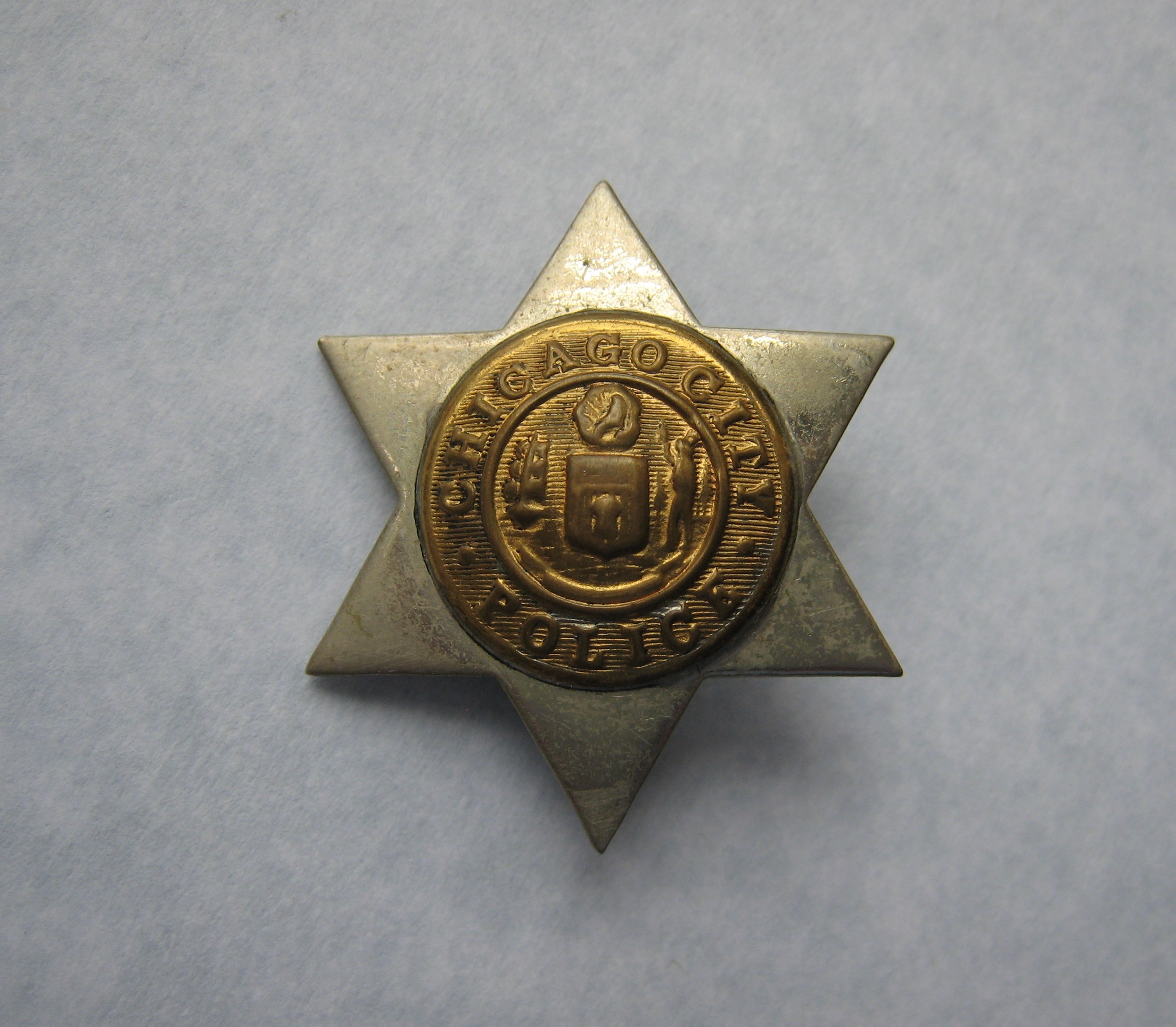
Documents that my mother in law saved show that Harry’s grandparents on his father’s side were named Carl August Zech (1857-1930) and Julianna Dombrowski (1857-1942).  Carl’s parents were David Zech and Christine Lenfer. Harry’s grandparents on his mother Florence’s side were Alice Wheeler (1872-1963) and Albert Huff (1865-1939). Florence and Albert had 6 children: Edward, May, Florence, William, George and Marcella.  Albert was a policeman for the city of Chicago.  Click here to see a record of funeral costs and an obituary for Albert Huff.  Albert’s obituary states: “Albert Huff, 76 years old, a retired policeman, died yesterday in Blaine Ramsay hospital.  Huff saw service at the Iroquois fire, the stockyards fire of 1910, and the Eastland Disaster.  He lived at 1330 South Pulaski Road.  Surviving are his widow, Alice, three daughters, Mrs Florence Zeck, Mae, and Marcella, and three sons, William, Edward, and George.  Funeral services will be held Thursday at 9:15 am in the chapel at 4817 Madison Street, with burial in All Saints’ Cemetery.”

A button from Albert's police uniform.

A button from Albert’s police uniform, click to enlarge.

The Iroquois Theatre Fire occurred on December 30, 1903, in Chicago, Illinois.  “It is the deadliest theater fire and the deadliest single-building fire in United States history. A total of 602 people died as a result of the fire.”  Click here to read about the fire in an article posted at the Chicago Tribune.  The stockyards fire of 1910 “stood as the single greatest loss of professional big-city firefighters in U.S. history until Sept. 11, 2001.”  Click here to read more about this tragedy from the Chicago Tribune.

Albert Huff

Albert Huff

In the Eastland disaster of 1915 844 employees and family of Western Electric Co. drown in an accident on the Chicago River. Click here for a link to the disaster from the Chicago Tribune.  My father-in-law’s grandfather was a huge part of Chicago’s history at the turn of the century.  Harry was born in 1921, he was 18 years old when his grandfather died.  I wonder if he asked his grandfather about his experiences on the police force.

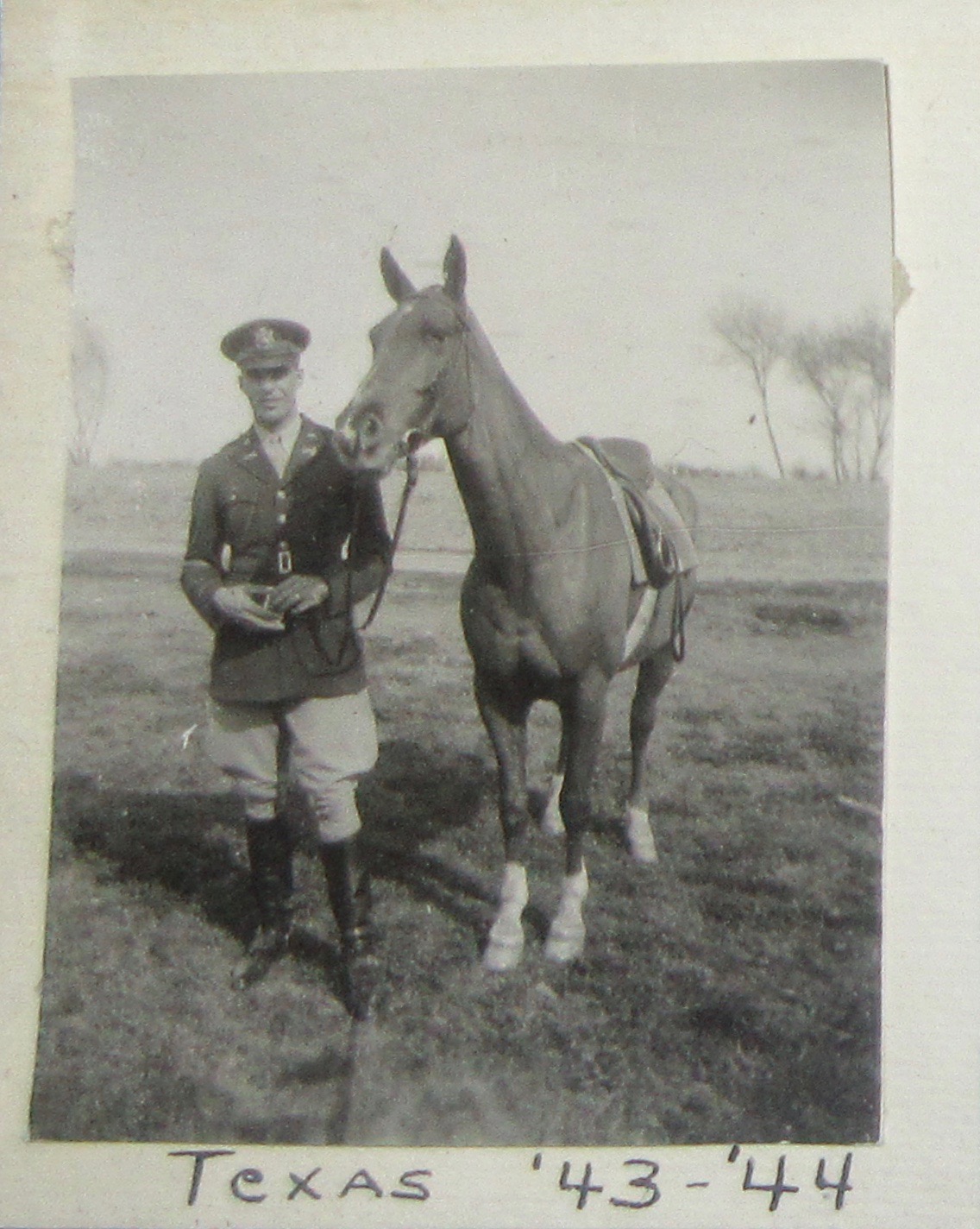
Harry Zeck & HorseDuring his career Harry served at Guadacanal, Okinawa, Korea, Japan, and Taiwan.  State side he was stationed in Illinois, Michigan, Alabama, Oregon, Washington DC, and Texas. In the photo on the left Harry is pictured with his horse named Kit. He was a Second Lieutenant with the US Army (which became the Army/Air Corp. and then became the US Air Force). Harry quickly rose in rank, in 1945 he was promoted to First Lieutenant Captain Major in the Air National Guard. In 1951 he was promoted to Major, in 1953 promoted again to Lieutenant Colonel. From 1954-1956 he was stationed in Korea and Japan as Director of Personnel. From 1957-1962 the family were living in Washington DC, Harry was at the Pentagon in charge of Airman Procurement. He was then assigned to the University of Portland in Oregon as their Professor of Aerospace.  Upon returning from Taiwan as a military advisor (1966-1968) Harry was promoted to Colonel and was stationed in San Antonio, Texas.  Harry retired from the Air Force in 1974. Click here to see a timeline of Harry’s military service

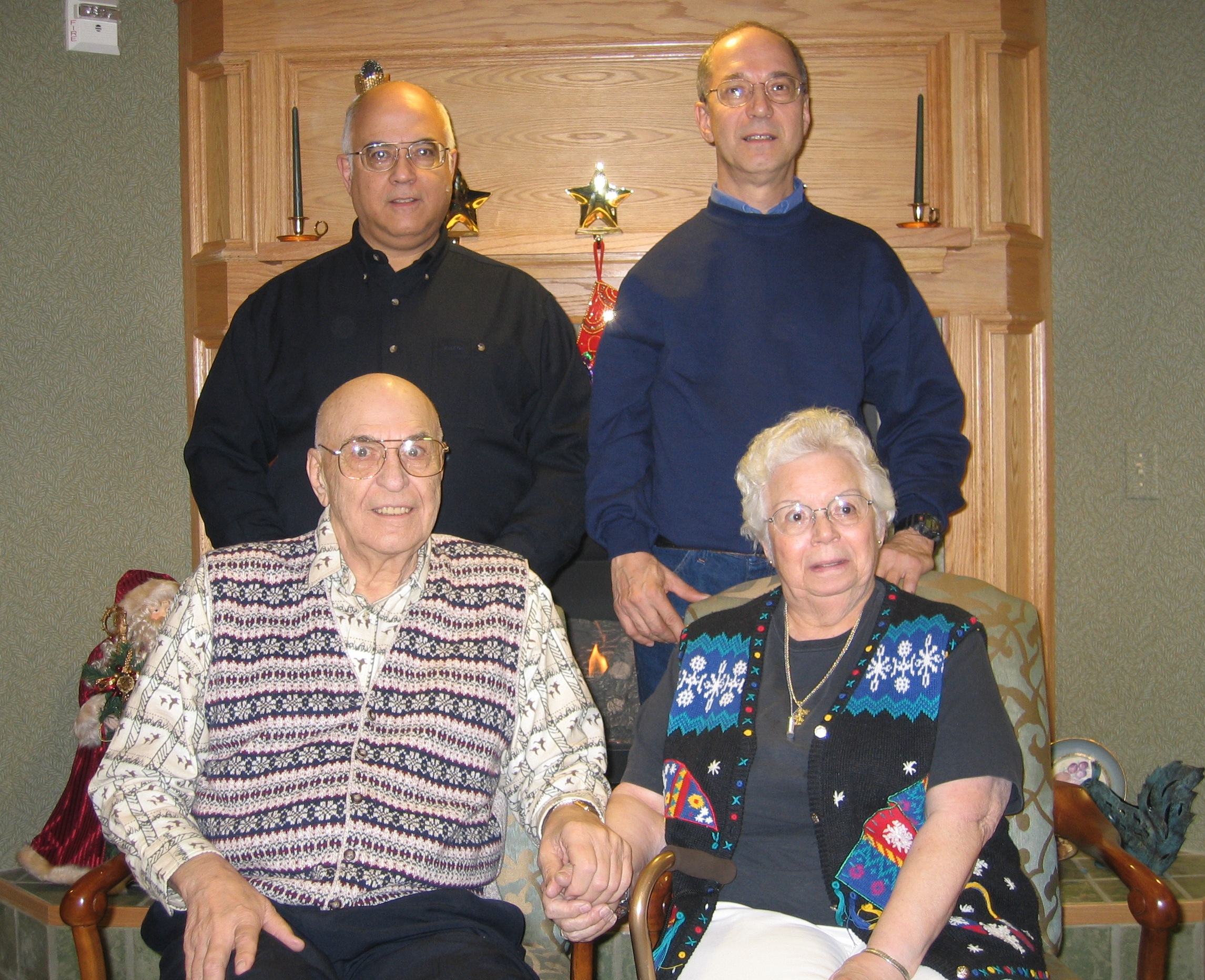
Harry and Yvonne had two sons; Frances Harry and Donald Arthur. Harry and Yvonne passed away within two months of each other in 2007.   

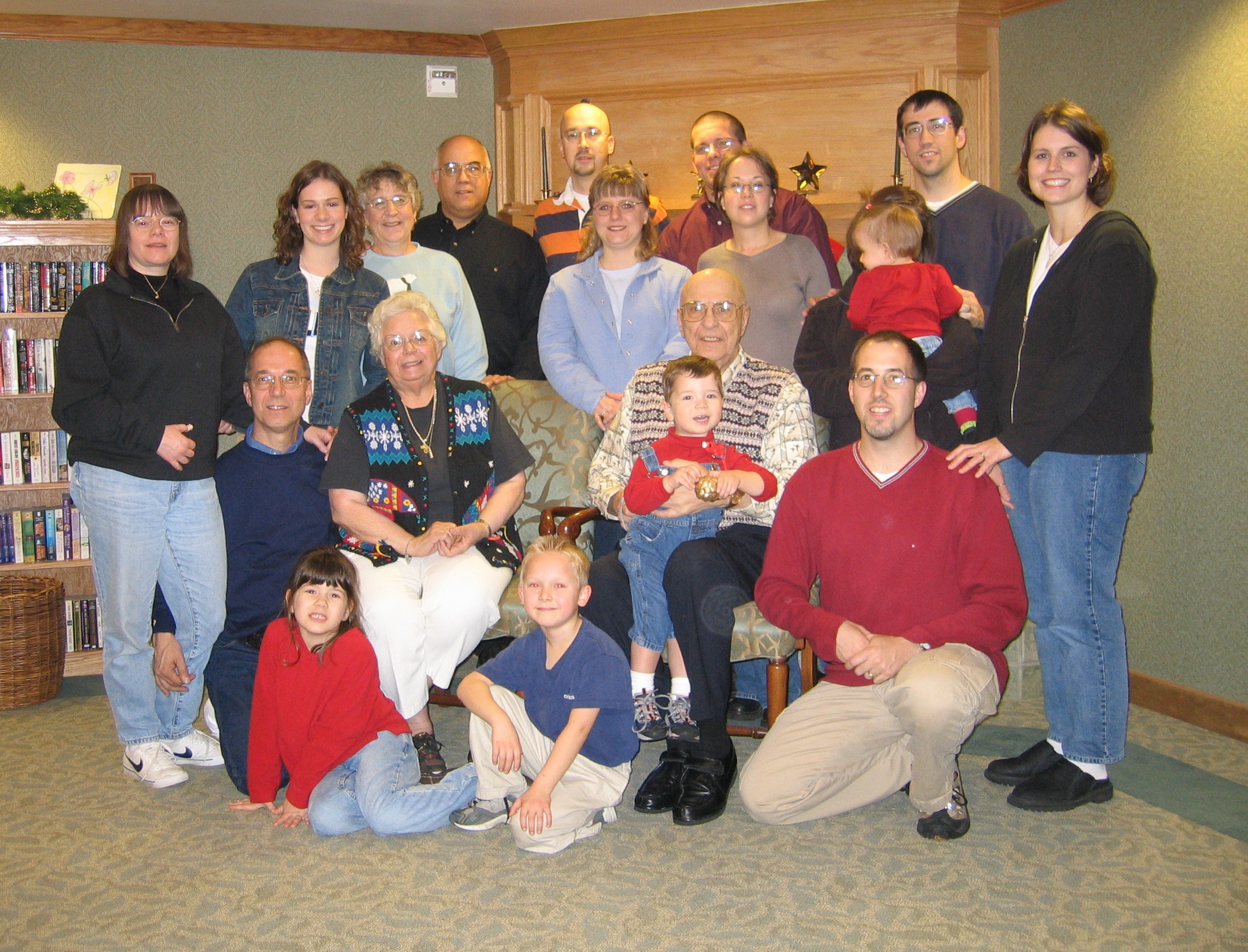
Harry and Yvonne with their descendants.

Harry and Yvonne with their descendants.

A week after my father-in-law passed away I was at Glenwood retirement center visiting my mother-in-law.  A nurse’s aid stopped me in the hall and said she had something she wanted me to hear.  She pulled out her phone and I listened to a recording of the Colonel sing “Oh, how I hate to get up in the Morning”.   She said “Harry had two songs that he liked to sing in the shower in the the morning and I recorded them both”.  I told her that I was so grateful to her for making these recordings, now Harry’s descendants will forever be able to hear his voice.  What a wonderful act of kindness.  Click the following link to hear the Colonel singing:  Col Zeck Singing The Bugler Song 2007.

Harry and Yvonne are buried at Willamette National Cemetery in Portland Oregon.    Harry and Yvonne’s headstones are engraved “Parents and Patriots”.